Briggs & Stratton Engine Repair in Port Charlotte, FL
Briggs & Stratton engines are the familiar sound behind a lot of Port Charlotte lawns. Push mowers, self propelled mowers, lawn tractors, and older riders all show up with that red, black, or silver engine cover and a simple complaint: it used to start. We work on Briggs powered mowers as an independent mower-only shop, with the practical goal first. Find the fault, quote it clearly, and tell you whether the machine has enough life left to deserve the repair.
Independent repair shop. Not affiliated with or authorized by Briggs & Stratton; the name is used only to describe the machines we service.
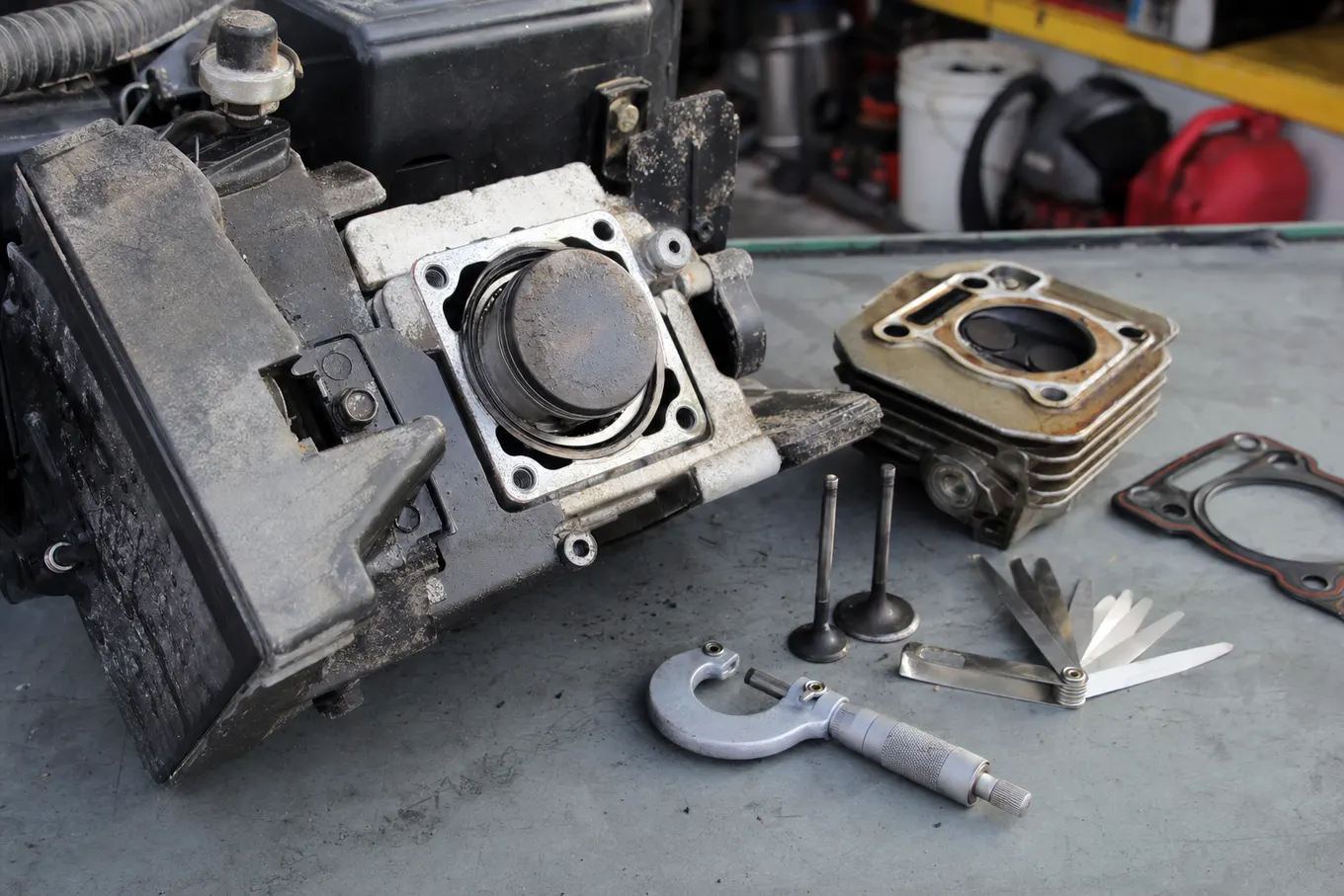
Need Briggs & Stratton mower repair in Port Charlotte? We service Briggs powered walk-behind mowers, self propelled mowers, lawn tractors, riding mowers, and residential zero turns when the job fits normal mower repair. That includes no-start diagnosis, carburetor work, fuel problems, starter and charging issues, valve lash checks, tune-ups, blades, belts, and deck complaints. We are an independent shop, not a dealer, and factory warranty decisions belong with dealers. For everyday repair, we inspect first, give a quote before work starts, and offer pickup when loading the mower is the hard part. If you are in Port Charlotte or nearby, call or text the shop.
What a mechanic actually watches on Briggs & Stratton mowers
Briggs & Stratton repair starts with a useful truth: the engine badge does not tell the whole story. The same brand can be bolted to a budget push mower, a solid self propelled mower, an older lawn tractor, or a residential zero turn. Some have simple primer bulbs. Some use ReadyStart style automatic choking. Some have older Quantum era manners. Some are Intek overhead valve engines on riders. Some EXi era engines were sold around low-maintenance expectations that still do not cancel dirty air, stale fuel, bad oil, or Florida heat.
That variety is why we do not diagnose by logo. A Briggs engine that starts and dies may have a varnished carburetor. A Briggs that cranks like the battery is weak may have valve lash trouble, starter drag, cable resistance, or a tired battery. A Briggs that bogs in grass may be underfed, overworked by a packed deck, or simply swinging a blade that looks like it tried to cut a seashell driveway. The bench work is about separating the engine problem from the mower problem.
Quantum, Intek, EXi, and ReadyStart are clues, not shortcuts
On walk-behind mowers, Briggs engines often show up as classic vertical-shaft singles. Older Quantum style machines tend to be straightforward: fuel, spark, compression clues, blade brake, pull rope, governor action, and carburetor condition tell most of the story. Later walk-behinds may use plastic carburetor assemblies, auto choke parts, or ReadyStart systems where the owner does not have a choke lever to manage. Those systems are convenient when clean and adjusted. They are less charming when old fuel gums the tiny passages or a linkage hangs up.
On riders and lawn tractors, Intek family engines add more pieces to the conversation. A single cylinder rider engine may need valve lash attention before the starter can spin it properly. A V-twin may have ignition, charging, fuel pump, carburetor, valve cover, cooling, and governor details that a push mower never had. The seat, safety switches, PTO, deck load, belts, and battery also get involved. That is why a rider with a Briggs engine often needs whole-machine diagnosis, not just engine guessing.
For a general repair path, our lawn mower repair process stays the same: listen to the symptom, inspect the machine, prove the failure, then quote the repair. The series name helps us decide what to check first. It does not get to skip the inspection.
The first checks are usually fuel, air, spark, load, and valve behavior
Briggs engines make plenty of dramatic noises, but the first checks are plain. Is the fuel fresh enough to burn cleanly? Is the tank feeding the carburetor? Is the air filter choking the engine with dust and oil? Does the spark stay strong when the engine warms up? Is the blade or deck putting a heavy load on the crankshaft? Is the oil level correct, and does the oil smell like gasoline? Those checks prevent the old repair-shop comedy where three parts get replaced before anyone notices the dirty filter.
Carburetor inspection matters because ethanol fuel and storage time are hard on small passages. Plastic carburetors are not automatically junk, but they are less forgiving of varnish, warped gaskets, sticky needles, and careless cleaning. On overhead valve engines, valve lash can matter more than owners expect. A Briggs rider that barely turns over may not have a bad starter. The compression release may not be working as intended because the valves are too tight or too loose.
Blade strikes get their own caution. If a walk-behind hits a root, paver, or hidden chunk of debris, the engine may still run badly after the blade is changed. A sheared or shifted flywheel key can throw timing off. A bent blade adapter, damaged crankshaft, or deck distortion can also create vibration that no tune-up will fix. Our small engine repair work looks at the engine, but it also asks what happened to the mower around that engine.
Briggs build quality is common, practical, and very condition-dependent
Briggs & Stratton built its reputation by being everywhere, not by making every mower into a museum piece. That is not an insult. Common engines are easier to understand, easier to service, and often easier to keep alive because normal wear parts can be found. A plain Briggs push mower engine with clean oil, a sharp blade, and fuel that has not turned to syrup can work for a long time in homeowner service.
The fair warning is that many Briggs powered mowers are sold at very different quality levels. The engine may be repairable while the deck is flimsy, the wheels are worn out, the handle is cracked, or the drive system is near the end. On a rider, the engine may still have life while the deck spindles, belts, tires, battery, and wiring are asking for attention too. Brand respect does not make a tired machine younger.
Plastic parts also need a grown-up discussion. Plastic carburetors, shrouds, tanks, air boxes, and linkages can be perfectly serviceable when they are clean, supported, and not heat-baked. They can also become the weak point after years of sun, ethanol fumes, and vibration. We do not call a part bad because it is plastic. We call it bad when testing, leaks, warping, cracks, or wear prove it.
Parts availability is one of Briggs & Stratton's real advantages
The best thing about common Briggs engines is not romance. It is parts. Air filters, spark plugs, recoil parts, carburetor assemblies, fuel caps, gaskets, coils, starters, solenoids, charging parts, valve cover gaskets, and service pieces are often available through normal channels. That can turn a dead Saturday mower into a reasonable repair instead of a parts hunt with a sad ending.
There is still a process. Briggs engines need the correct model, type, and code information when parts get specific. Two engines can look similar from five feet away and use different carburetors, filters, tanks, starters, or linkages. Riders add another layer because the mower manufacturer controls the deck, belts, frame, controls, and wiring around the Briggs engine. The engine part may be easy. The mower part may be the harder conversation.
For Briggs powered tractors, our riding mower repair work includes the whole package: engine, battery, starter circuit, PTO, drive belt, deck belt, pulleys, spindles, blades, tires, and safety switches. For Briggs powered residential zero turns, zero turn mower repair adds deck load, hydro drive behavior, parking brake logic, and tighter packaging. Parts availability helps. It does not turn every worn system into a smart estimate.
Southwest Florida ages Briggs engines in its own annoying way
A Briggs engine in Port Charlotte does not get a long winter nap in a dry garage unless the owner is very organized. Mowing season stretches across most of the year. Summer grass is thick. Afternoon rain makes clippings pack under decks. Sugar sand works into wheels, pulleys, linkages, and air filters. Salt air near the coast finds battery terminals, ground connections, mufflers, hardware, and exposed steel. Heat cooks rubber, plastic, and batteries faster than owners expect.
Snowbird storage creates a different failure pattern. A mower sits with E10 fuel in the tank, then needs to wake up months later like nothing happened. The float bowl may contain enough fuel to cough once, but the main jet cannot feed the engine. The tank may smell sour. The needle may stick. The fuel line may shed debris. A ReadyStart system may be blamed when the real issue is old fuel and a dirty carburetor.
Year-round mowing also means more hours. More hours mean valve lash changes, recoil wear, starter wear, blade adapter abuse, dirty cooling fins, oil breakdown, and air filters that look like they were used to dust a garage floor. Good maintenance is not fancy. It is clean air, clean oil, sharp blades, fresh fuel, cooling airflow, and not ignoring a new vibration until it becomes the most expensive sound in the yard.
The short version: Briggs & Stratton engines are usually worth diagnosing before anyone gives up. Their strength is familiarity, parts support, and a design history that a mower mechanic sees often. Their weakness is the same as every small engine in Florida. Bad fuel, heat, grit, moisture, and neglect all collect interest. We look at the engine and the mower it lives on, then give you the repair value in plain language.
The Briggs & Stratton repair jobs that roll through our door
Most Briggs owners do not bring a model chart. They bring a sound, a smell, or a frustration. It fires once and quits. It only runs with the choke half happy. It clicks instead of cranking. It mows fine until the grass gets thick. It ran before the house was closed up for the season. Those are good clues. We turn them into tests instead of selling a pile of parts.
It starts, surges, then dies after sitting
The owner usually describes this one with a pull of the rope in the air. It starts for a second, hunts up and down, maybe runs on spray, then shuts off. Sometimes the primer bulb feels different. Sometimes there is fuel in the tank, but the engine acts empty. On Briggs walk-behind engines around Port Charlotte, old E10 fuel and carburetor restriction are high on the list, especially after snowbird storage or a long rainy stretch.
We check the fuel first because fresh-looking fuel can still be bad. Then the tank, fuel cap vent, line flow, carburetor bowl, main jet, gasket seal, needle movement, primer or auto choke behavior, air filter, spark, oil level, and blade brake all get attention. Plastic carburetor assemblies need careful handling. Some clean up. Some are better replaced when warping, plugged passages, or brittle pieces make repair a poor bet.
The fix may be carburetor cleaning, a carburetor replacement, fuel system service, filter replacement, linkage correction, contaminated oil service, or a separate spark issue found during testing. Our lawn mower will not start page explains the wider no-start path, and lawn mower carburetor repair goes deeper on the fuel side. Prevention is simple enough to be ignored: do not store it with old gas and do not keep yanking until the rope becomes the next repair.
It runs, but the cut goes ugly when grass gets thick
This complaint often arrives as an engine complaint. The Briggs sounds tired, the mower bogs, clippings clump, and the owner says it has no power. Sometimes that is true. A restricted carburetor, dirty air filter, weak governor response, fouled plug, bad fuel, or low engine speed can make a mower fall on its face under load. But a dull blade and packed deck can make a healthy engine look guilty.
We inspect the blade, adapter, crankshaft vibration, underside of the deck, chute, wheel height, air filter, cooling shroud, governor linkages, and engine speed behavior. Bahia seed stems and St. Augustine runners are not gentle on dull blades. Wet clippings glued under the deck can steal airflow. If the blade is rounded off and the deck is carrying a green blanket, the engine has to work harder while doing worse work.
The repair may be blade sharpening or replacement, deck cleaning, filter service, carburetor correction, governor adjustment, oil service, or a vibration diagnosis after a blade hit. Prevention means sharpening before the edge is completely gone, cleaning under the deck before the clippings become masonry, and not mowing the wettest grass at the lowest height just because the mower started.
The Briggs engine runs, but the rider will not drive or the deck will not behave
On lawn tractors, the engine can be the loudest part of the machine and still not be the failed part. Owners say the Briggs runs, but the mower barely moves, throws a belt, squeals, refuses to engage the blades, or cuts one side lower than the other. That is where engine repair and mower repair have to be separated. A running engine does not prove the drive system, deck, PTO, pulleys, spindles, or belts are healthy.
We look at drive belt routing, deck belt condition, idlers, pulleys, spindle bearings, blade condition, tire pressure, deck pitch, PTO engagement, brake release, and whether the engine is being dragged down by a seized or rough component. A belt that keeps failing usually has a reason. Heat marks, dust, frayed edges, shiny pulley grooves, or an idler that does not swing freely can point to the real problem.
The fix may be a belt, pulley, idler, spindle, blade set, deck leveling, cable adjustment, PTO diagnosis, or debris cleanup around moving parts. Our lawn mower belt and deck repair notes explain why the cut system has to be checked as a system. Prevention is regular cleaning, reacting to squeals early, keeping blades balanced, and not waiting until a thrown belt cuts the mowing day in half.
It clicks, cranks slowly, or fights the starter
A Briggs rider that clicks once can make the battery look guilty. Sometimes it is. Florida heat is rough on batteries, and sitting is worse. But slow cranking can also come from dirty terminals, weak grounds, a tired solenoid, worn starter, bad cables, charging trouble, safety switch issues, or valve lash that keeps the compression release from helping the starter do its job.
We start with voltage under load, not just a battery sitting there looking innocent. Then we check terminals, cables, grounds, fuse condition, key switch output, solenoid command, starter draw, charging output, PTO and brake switch logic, and engine mechanical drag. On overhead valve Briggs engines, valve adjustment can be part of the cranking diagnosis. If the starter struggles at the same spot every revolution, that clue matters.
The fix may be a battery, cable cleaning, solenoid, starter service, charging repair, switch diagnosis, connector repair, or valve lash adjustment. Our lawn mower electrical repair page covers the testing mindset. Prevention means keeping the battery charged during storage, cleaning corrosion early, parking out of weather when possible, and not replacing electrical parts by guess until the problem gets expensive.
Repair versus replace on a Briggs powered mower depends on the machine around the engine. A clean push mower with a solid deck and a plugged carburetor is a different decision than a rider with a tired engine, rotten tires, sloppy steering, bad belts, corroded wiring, and a deck that sounds like a coffee can full of bolts. Briggs parts availability gives many machines a fair shot. It does not make every repair sensible. We inspect, quote first, and tell you when the money is better kept for another mower.
What We Service on Briggs & Stratton Machines
Full diagnosis and repair
Any symptom, tracked to its actual cause before a single part goes on.
Full guideTune ups
Oil, plug, filters, blades and a complete go-over on the Florida schedule.
Full guideCarburetors and fuel
Ethanol varnish is brand-agnostic. Cleaning, rebuilds and replacements.
Full guideElectrical systems
Batteries, starters, solenoids, charging and safety switches.
Full guideBelts, decks and spindles
Cut quality lives under the machine. We keep it true.
Full guidePickup and delivery
Dead machines ride free of drama. We come get them.
Full guideBriggs & Stratton Owners Across Four Counties
Based in Port Charlotte, serving the whole 30 mile circle. See the full service area.
Asked at the Counter
Is a Briggs & Stratton mower engine worth repairing?
Often it is, especially when the engine has good compression, the deck is solid, and the problem is a normal wear issue like fuel restriction, a starter circuit fault, valve lash, a recoil problem, or tune-up neglect. The answer changes if the mower around the engine is worn out. We inspect the whole machine before telling you to spend money on it.
Can I get Briggs & Stratton engine repair without using a dealer?
Yes. An independent mower repair shop can handle many everyday Briggs & Stratton problems, including carburetors, no-start complaints, tune-ups, valve lash checks, pull-start issues, starter problems, belts, blades, and mower diagnosis. Factory warranty questions are different and belong with a dealer. We do normal repair, quote before work, and say plainly when a dealer path makes more sense.
Why does my Briggs & Stratton engine start and then die?
The usual suspect is fuel delivery. Old E10 gas, varnish in the carburetor, a restricted jet, a stuck needle, a dirty air filter, or a choke problem can let the engine fire briefly and then starve. We also check spark, oil condition, blade brake drag, and whether the mower hit something. The few-second run is useful evidence, not the whole diagnosis.
Are Briggs & Stratton plastic carburetors repairable?
Sometimes. A plastic carburetor that is dirty, plugged, or leaking from a serviceable gasket may be cleaned or repaired. One that is warped, cracked, brittle, or clogged in passages that will not clear may be a better replacement candidate. The correct answer depends on the specific carburetor, parts availability, and whether the rest of the mower is worth building around.
What does ReadyStart mean on a Briggs mower?
ReadyStart is Briggs & Stratton's automatic starting setup on many walk-behind engines, so the owner does not manually set a choke or primer in the old way. When everything is clean and moving correctly, it is convenient. When fuel goes stale, linkages stick, air leaks show up, or the carburetor gets dirty, the system gets blamed even if the root problem is ordinary fuel trouble.
Why is my Briggs riding mower hard to crank even with a charged battery?
A charged battery is only one piece. Cable resistance, corroded grounds, a weak solenoid, worn starter, safety switch trouble, charging issues, or tight valve lash can all make a Briggs rider crank slowly. Overhead valve engines can fight the starter when the compression release is not being helped by proper valve adjustment. We test voltage under load and then follow the circuit.
Are parts still available for older Briggs Quantum, Intek, or EXi engines?
Many common service parts are still available, which is one reason Briggs engines are worth inspecting before giving up. Filters, plugs, carburetors, gaskets, coils, recoil parts, starters, and tune-up items are often findable. Age still matters. The exact model, type, and code can change the part, and the mower's deck, frame, or drive system may decide the repair value.
Do you repair Briggs engines on Craftsman, Toro, Troy-Bilt, and other mowers?
Yes, if the mower itself is within the kind of work we handle. Briggs & Stratton engines appear on many mower brands, so we diagnose the engine and the mower around it. A no-start issue may be Briggs fuel trouble, while a drive or deck issue may belong to the mower manufacturer. We sort that out before quoting the repair.
Get Your Briggs & Stratton Back on the Lawn
Describe the symptom and we will give you the straight answer: what it likely is, what it costs, and how fast.
- Quotes approved by you before any work
- Pickup and delivery available
- Or call now: (941) 555-0123