
Lawn Mower Repair in Cape Coral, FL
Cape Coral owns more lawn mowers than any city we serve, and more of its people turn their own wrenches too. When a machine needs more than a driveway fix, we are the mowers-only shop up the road in Port Charlotte, and our truck covers every street on the grid.
Cape Coral lawn mower repair, minus the Cape Coral wait. Joe’s Small Engine Repair works on lawn mowers and nothing else: push, self propelled, riding, zero turn and battery machines. The shop is in Port Charlotte, about 45 minutes north, and pickup and delivery reaches every one of the Cape’s six ZIP codes plus Matlacha Isles. You approve a straight quote before a wrench moves. Call or text (941) 555-0123.
A Grid of Canals, Quarter Acre Lots and Working Mowers
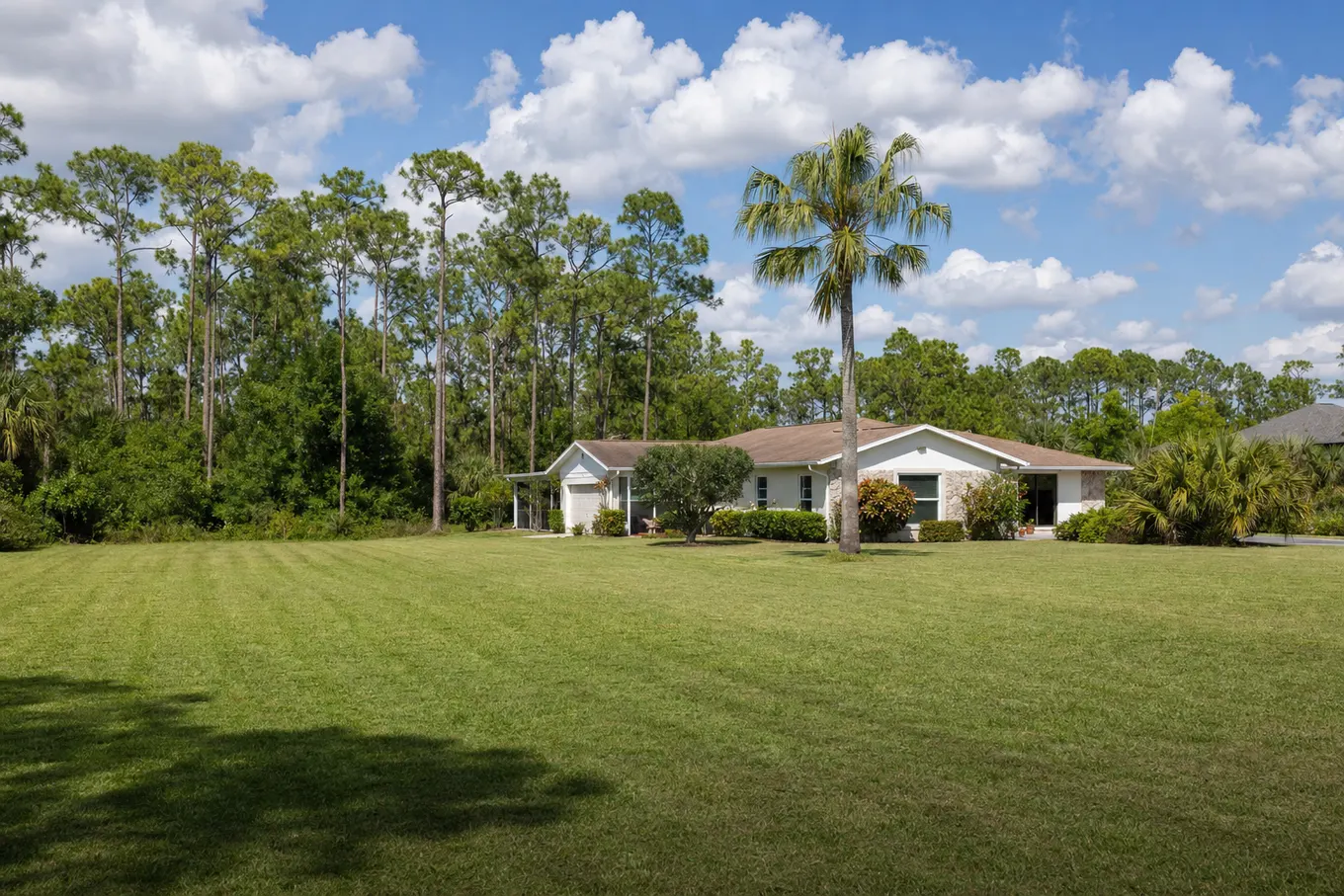
Cape Coral is the biggest city in Southwest Florida, about 220,000 people living on a pre-platted grid that was drawn out decades before most of it was built. Nearly every house sits on its own quarter acre, nearly every quarter acre grows St. Augustine like it is getting paid, and nearly every garage keeps a mower within reach. Run that math across the whole grid and you get more cutting equipment per square mile than anywhere else in our service area.
Then add the water. Four hundred miles of canals thread through the city, and all that surface water keeps the air heavy and the grass moving. In the June through September stretch, a Cape lawn can demand a cut every five or six days, and plenty of owners are out there in the rain gaps making it happen. Mowers here never really get an off season, just a slower one, and the wear tells on our bench: overheated engines, glazed belts, decks caked an inch deep with wet clippings.
The Cape is also the do-it-yourself capital of our map. A big share of owners here change their own oil, swap their own blades, and only look for a shop when a problem outruns the toolbox. We respect that, and it shapes the work we get: the machines that reach us from Cape Coral tend to be the genuinely stuck ones. Carburetors that ignored a third can of cleaner. Hydro drives losing their push. Electrical faults that have already eaten two Saturdays.
The map has quirks worth naming. Matlacha Isles hangs off the west edge and counts as Cape coverage in our book, and the newest northwest streets sit a solid twenty minutes from the oldest southeast ones. When we say the Cape is covered, we mean corner to corner of all of it.
That is the kind of trouble a specialty bench is for. We are in Port Charlotte, about 45 minutes up the road, lawn mowers are the only thing we fix, and the pickup truck makes the distance our problem instead of yours.
How Cape Coral Wears Out a Mower
Twenty four towns on our map, and each one kills machines its own way. The Cape’s methods, as seen from the workbench.
Wet season growth that never lets the engine coast
Irrigation plus summer rain plus fertilizer turns a Cape quarter acre into a grass factory. The blades of St. Augustine get wide, waxy and heavy, and when you cut it damp, which in July is the only way it comes, the engine is hauling a load closer to baling hay than trimming turf. Small engines are air cooled. Work one that hard in 92 degree heat with a cooling shroud full of chaff and the oil breaks down early, valves tighten, and head gaskets start weeping.
You can hear the overload before it becomes a repair. The engine note drops and stays dropped, the cut gets stringy, the belt squeals on engagement. Regular oil changes, a clean cooling shroud and honest blade sharpening carry most of the load here. Machines that get those three things survive Cape summers. Machines that do not become August diagnosis work.
There is also a right way to cut overgrown wet season grass that spares the equipment: raise the deck, slow the ground speed, and take half-width passes when the lawn has gotten away from you. It feels slower and finishes faster, because the engine stops bogging and the chute stops plugging every third pass.
Canal humidity and rust that starts where you cannot see it
Four hundred miles of canals do wonderful things for property values and slow, quiet damage to steel. Waterfront and near-water lots across the Cape run humid around the clock, lawns get cut wet, and the clippings that stick to the underside of a deck hold moisture against bare metal for days. The deck rots from the inside face out, which is why so many owners discover it only when a blade tip punches through.
The same damp gets into spindle bearings, cable sheaths and electrical connectors. Our fix is not exotic: a yearly underside cleaning, a rust treatment on the raw spots, grease where grease belongs, and replacement of any deck hardware that is past saving. Cheap, boring and it roughly doubles what a deck survives this close to the water.
Two free habits help as much as anything we sell: rinse the underside while clippings are still soft rather than after they set like plaster, and give the deck a minute to spin itself dry before the mower goes back inside. Canal-lot machines that get those habits still have savable decks when they finally visit us.
E10 gas, garage heat and the carburetor merry-go-round
Every gallon of regular pump gas in Florida carries ethanol, and ethanol pulls water straight out of humid air. In a Cape Coral garage that spends the summer at 100 degrees, a tank of E10 starts going stale in about a month. The light ends evaporate, the residue turns to varnish, and the varnish settles in exactly the wrong place: the metering passages of the carburetor, some thinner than a pencil lead.
This is the single most common reason a Cape mower surges, hunts, starts hard or dies at idle. Spray cleaner reaches maybe half of the passages, which is why the DIY fix so often almost works. On the bench we strip the carb, run it through proper cleaning, and rebuild or replace it depending on condition. Our carburetor service exists mostly because of Florida fuel, and the Cape keeps it busy.
Six ZIP codes, three generations of lawn
The southeast Cape grew first, and its yards show it: mature St. Augustine, big shade trees, and riding mowers that have been in the family for fifteen years. Those machines are usually worth every repair dollar, because they were built heavier than what replaced them on the showroom floor. The central Cape is the broad middle, established lawns and mid-age machines that mostly need honest maintenance.
The northwest is another world: fresh construction, builder sod rooting into sandy fill, and brand new equipment. Sand is murder on edges, so new lawn owners burn through blade sharpness faster than they expect, and battery mowers are everywhere on those streets. We service the cordless brands alongside the gas ones, and our electrical work covers both worlds: 12 volt starting systems on old riders and the switches and wiring on new pack-powered machines.
Do It Yourself, Right Up Until It Stops Making Sense
We are not the shop that tells Cape Coral to put the tools down. Oil changes, air filters, spark plugs, blade swaps: if you are comfortable doing them, keep doing them, and your mower will thank you. The honest line sits a little past that, and knowing where saves both money and weekends.
What lands on our bench from the Cape is the deep end. Carburetor metering circuits that spray cleaner cannot reach. Hydrostatic drives that need purging or parts. Spindle work that wants a press, not a hammer. Charging systems and safety switch circuits where guessing gets expensive, because every guess is a part you bought. Bring the machine and the pile of parts you already ordered, and we will tell you which ones the repair truly needs.
And if you just want the verdict, that is a real option. We diagnose it, hand you the findings and a quote, and you choose: our bench finishes it, or you take the answer home and do the labor yourself. Either outcome is fine by us. The diagnostic work is the part most driveways cannot duplicate.
- Keep for your Saturday: oil, plugs, filters, blades
- Send to the bench: carbs, hydros, spindles, wiring
- Always included: a straight answer and a firm quote
From First Text to Finished Cut
Thirty miles between us means the process has to be tight. Here is the whole thing, no surprises hiding in step four.
- Send the symptoms. A call or a text both work, and a short phone video of the problem is worth ten adjectives. Mention your corner of the grid so we can slot you into the right Cape run.
- Choose run or drive. Pickups get grouped by neighborhood, usually within a few days. Hauling it yourself? We will set a time so you are unloaded and gone in minutes, not waiting around a counter.
- The bench does its thing. Fuel, spark, compression, chassis, checked in an order that finds faults instead of feeding them parts. If you already ruled things out in your garage, tell us; good DIY notes shorten the diagnosis.
- You hear the number before anything happens. One phone call covers what we found, what fixing it costs and how long it takes. Yes starts the work. No gets you an honest conversation about alternatives, not a guilt trip.
- It rides home ready to mow. Test run completed, steel sharpened where the job called for it, and a plain-language rundown of what we did plus anything worth watching next season.
What a Cape Coral Repair Costs, and What Decides It
Diagnose, quote, wait for your approval. That order never changes, so the only cost surprise possible is a good one. Three things drive the figure: the fault itself, the parts it demands, and the bench hours the work takes. A fourth factor hides behind those: how long the problem ran before the machine came in. A carburetor that surged for one month is a cleaning. The same carburetor ignored across a whole wet season often drags the fuel tank, lines and filter into the job with it.
The Cape adds its own wrinkle: the half-finished repair. Sometimes your DIY work lowers the bill, because you have genuinely narrowed the problem and saved us the first hour. Sometimes it raises it, usually when a wounded machine kept running anyway and turned one failed part into three. We tell you which situation you are in without any lectures, since half our own education came from taking things apart.
On the fix-or-replace question, the Cape splits cleanly. The older riders in the southeast were built heavy and almost always justify repair. Cheap big-box walk behinds can be genuinely borderline, and when one is, we say so before you spend anything. Cordless machines swing on the price of a battery pack, which is why we check whether the pack is even the problem first. Across all three, a sound repair typically lands at a small fraction of what an equivalent new machine costs.
The Cape Coral Mower Year
Grass on the grid follows the rain, and smart maintenance follows the grass. Rough schedule below.
December through April: the dry window
Growth slows, cutting drops to a relaxed cadence, and this is exactly when the annual service belongs. The bench is calmer, parts have time to arrive without pressure, and the machine greets the rains in fighting shape instead of limping into them.
May: last call for easy fixes
The humidity is loading up and everyone can feel what is coming. Sharpen now, replace the belt that looked glazed in March now, chase the slow starting problem now. Every small job handled in May is a breakdown that does not happen in July.
June through September: survival season
Weekly cuts, heavy loads, damp grass. Hose the deck underside after wet mows, keep an ear out for new noises, and do not let a symptom ride for six weeks because the calendar is busy. Summer is when small problems compound fastest on the Cape.
October and November: recovery
Growth backs off and the machine has earned attention: a post-season sharpen, an oil change if the hours piled up, and a fuel plan for any mower about to sit idle. Treated or drained fuel in November prevents most of the carburetor work we see the following spring.
The Six Jobs the Cape Sends Us Most
Brand is never an obstacle: Toro, Craftsman, John Deere, Husqvarna, Cub Cadet and Troy-Bilt make up the usual Cape garage lineup, Briggs and Stratton, Kohler, Kawasaki and Honda engines cross the bench every week, and EGO, Ryobi and Greenworks hold down the cordless side.
General lawn mower repair
Not sure what is wrong? This is the front door. Full diagnosis on any mower type, then a quote you approve first.
Read the guideZero turn repair
Hydro drives, spindles, clutches and steering on the machines that keep quarter acre lawns to a weekly schedule.
Read the guidePush and self propelled
The Cape workhorse. Drive systems, cables, wheels, hard starting and every other walk behind complaint.
Read the guideCarburetor work
When the third can of spray cleaner changes nothing, we strip, clean, rebuild or replace it properly.
Read the guideWill not start diagnosis
Fuel, spark, compression, switches. We chase the actual fault instead of feeding the machine parts.
Read the guideBlade sharpening
Sharp, balanced steel that ends the ragged, browned-off cut St. Augustine shows within a day.
Read the guideForty Five Minutes Is Our Problem, Not Yours
Pickup and delivery, the Cape favorite
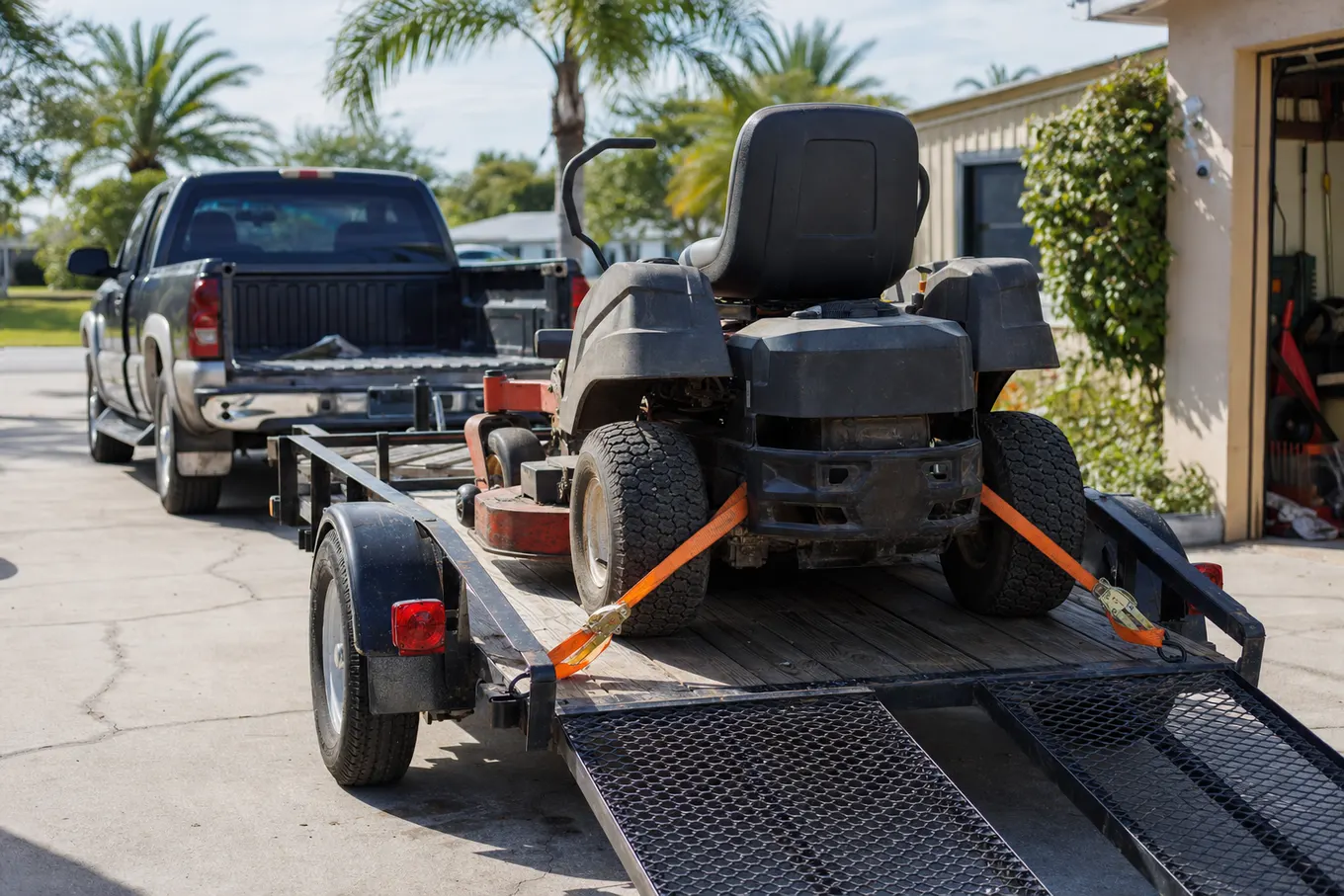
Most Cape Coral customers never see our parking lot, and that is by design. We schedule runs into the Cape, load the mower where it sits, and haul it north. Once it is diagnosed you get a phone call with a firm number, work starts only on your yes, and the machine rides back to your driveway on the next run after it is finished. Riders, zero turns and anything too dead to load itself: this is the service built for them.
Drive it up yourself
Headed north anyway? From the southeast Cape, US 41 through North Fort Myers runs nearly door to door to 4502 Meager Cir in Port Charlotte. From the northwest, Burnt Store Road up to Punta Gorda and over the Peace River bridge is the quieter route. Text before you leave and we will have the intake done in the time it takes to unload.
Covering the Lee County Corridor
The truck that serves the Cape works this whole stretch of the map. Find your own town below, or see the complete service area.
The repair patterns we associate with Cape Coral
Cape Coral is a big place to mow. With about 220,000 people spread across a canal city full of quarter acre lots, it sends us a different mix of problems than a smaller coastal village or a rural property town. The drive from Cape Coral to our Port Charlotte shop is about 30 miles, usually around 45 minutes, so most owners calling about lawn mower repair Cape Coral are trying to decide whether the symptom is simple enough to nurse along or annoying enough to fix properly.
The short version: Cape Coral makes mowers work often, sit oddly, and age in salty, sandy air. That combination shows up in the same handful of ways. These are the patterns we listen for when someone calls from 33904, 33909, 33914, 33990, 33991, or 33993.
We do not expect you to diagnose the mower before you call. What helps is the exact behavior. Does it crank and never fire, fire and quit, bog when the blades engage, shake after hitting sandy ground, click once at the key, or leave tall strips on one side of the deck? Cape Coral machines often have more than one small fault stacked together. A weak battery cable can hide behind a dirty carburetor. A dull blade can make a healthy engine sound tired. A packed deck can make a belt slip, then the slipping belt gets blamed for everything. Sorting those layers is the point of bringing the mower to a shop instead of throwing parts at it from a garage shelf.
Why do so many Cape Coral mowers have deck, belt, and spindle wear?
Quarter acre pre-platted lots create a very specific mower life. The machine is not doing pasture work, but it also is not just clipping a tiny strip of grass by the mailbox. It starts, turns, reverses, trims along fences, circles palms, and runs over sandy edges week after week. That favors self propelled walk-behinds, lawn tractors, and smaller riding mowers, all of which can get noisy deck bearings, stretched belts, loose idlers, and blades that stop cutting cleanly long before the engine quits. When we see this pattern, we check blade balance, spindle play, belt tracking, pulley alignment, deck height, cable adjustment, and the packed grass under the shell. One prevention habit helps more than people think: after a wet or heavy cut, let the mower cool and scrape the underside before that grass dries into a concrete-colored mat.
What does Cape Coral water exposure corrode first on a mower?
The canal grid is part of what makes Cape Coral what it is, but water nearby also means humid storage, salty air, and metal parts that quietly get crusty. We see battery terminals, starter grounds, safety switches, throttle cables, choke linkages, deck hardware, and wheel adjusters suffer first. On riding mowers and zero turns, corrosion can make a good battery look bad because the starter never gets a clean path. On push mowers, a sticky bail cable or governor linkage can make the engine act stranger than it really is. We clean and test the electrical path, free up moving linkages, replace swollen cables when needed, and coat the right spots so the repair lasts. The habit is simple: store the mower under cover with airflow, not sealed in a damp corner, and do not blast bearings or wiring with a pressure washer.
Why does a Cape Coral mower start for a few seconds, then die?
That little tease usually points toward fuel, especially after a mower has sat through part of the year. Cape Coral has a lot of do-it-yourself homeowners, seasonal schedules, and busy families who mow hard during the wet season, then let the machine sit when the yard slows down or the owner heads north. E10 gas can leave varnish in the carburetor, and the float bowl may hold just enough fuel to fire before the main jet starves. Our lawn mower carburetor repair work usually means cleaning the bowl, jet, needle, and passages, checking the fuel line and filter, and making sure the tank is not feeding old debris right back into the clean carb. If the mower also needs plug, filter, oil, cable, or blade work, a mower tune-up is often the cleaner answer. Prevention: buy smaller amounts of gas, use fresh fuel, and do not park the mower with half-stale fuel as a science experiment.
How do Cape Coral grass, sugar sand, and summer growth affect blades and filters?
Summer growth in Cape Coral can make a homeowner feel behind even when they mowed last week. Thick grass loads the deck, sandy soil takes the edge off blades, and fine grit clogs air filters faster than a tidy suburban brochure would admit. A dull blade does not just leave ragged grass. It forces the engine to work harder, makes the deck pack worse, and can make a mower feel underpowered when the real problem is a blade shaped like a butter knife. We sharpen and balance blades, inspect deck lift and discharge, clean the cooling fins when needed, and replace air filters that are too dirty to save. Our lawn mower blade sharpening work is especially useful before the wet season gets rolling. Prevention: avoid scalping sandy high spots, keep the air filter checked, and sharpen before the mower starts chewing instead of cutting.
One more Cape Coral wrinkle is parts history. With such a large do-it-yourself homeowner base, many mowers arrive after a carb kit, battery, belt, plug, or blade has already been tried. That is not a problem. Just tell us what was changed, even if it did not help. A wrong part or half-fixed adjustment can point straight to the real failure once the mower is tested under load.
If you are in Cape Coral and searching mower repair near me because the machine sounds different, starts weird, leaves strips, or will not move like it should, tell us the symptom in plain English. A short phone call or text through our contact page is enough to decide whether you should bring it up to Port Charlotte or ask about mower pickup and delivery.
What Cape Owners Ask Us
The Cape-specific answers live here. For the general stuff, the full FAQ page goes deeper.
Is Cape Coral really within your service area?
Yes. The Cape sits at the far edge of it, about 45 minutes from our Port Charlotte bench, and towns like this are exactly why our pickup and delivery service exists. Plenty of Cape customers never make the drive at all: we collect the mower, fix it, and bring it home running. If you would rather haul it yourself, the shop door is open for that too.
How does mower pickup work in Cape Coral?
Call or text with the symptoms and your general location in the Cape. We group Cape Coral stops into scheduled runs so each trip does double duty, which keeps the service sensible for everyone. On pickup day we load from your driveway, garage or side yard, diagnose it at the shop, phone you a firm quote, and only then start the repair. The return trip is part of the deal.
Do you cover all six Cape Coral ZIP codes?
Every one: 33904, 33909, 33914, 33990, 33991 and 33993, plus Matlacha Isles on the west side. From the oldest streets in the southeast to lots in the northwest where the sod went down last month, if your address says Cape Coral, our truck can find it.
I do my own repairs. Can you take over just the part I am stuck on?
Gladly, and you would not be the first. A good share of our Cape work begins with some version of 'I already swapped the carb and it still surges.' Bring the machine along with whatever parts you bought, and we will pin down the real fault, tell you which of those parts the job actually needs, and quote the finish. You decide whether our bench or your garage closes it out.
Why does my mower bog down and stall every summer?
Wet season St. Augustine is tall, dense and usually damp at cutting time, and that combination loads a small engine far beyond a spring mow. A dull blade multiplies the strain, and a deck packed with old clippings multiplies it again. Start with a sharpen and a deck cleanout. If the bogging continues on a clean deck with sharp steel, compression or fuel delivery is the next suspect, and that is bench work.
Does living on a canal actually affect my mower?
It shows up on our bench all the time, mostly as moisture damage. Canal lots stay humid, irrigated lawns get cut wet, and soaked clippings cling to the underside of the deck like a poultice. Steel rots from the bottom up, spindle bearings quit early, and fasteners seize. A once-a-year underside cleaning and inspection catches all of that while it is still a cheap fix.
Do you work on battery mowers from the newer Cape neighborhoods?
Yes. Cordless machines from EGO, Ryobi, Greenworks, Kobalt and the rest are claiming a bigger slice of Cape garages every year, especially in newer construction. We handle their blades, decks, drives, switches and wiring, and before you spend a dime on a replacement pack we will walk you through whether the math favors it.
How long will a Cape Coral repair take?
Quick jobs like sharpening or a standard tune usually clear the bench within a couple of days. Repairs that need diagnosis get a real timeline when we quote them, because it depends on the fault and on parts availability. For pickup customers we fold the return delivery into the next Cape run after the work wraps, and we tell you that date up front.
What is it going to cost?
We will not throw out a number before seeing the machine, and no work begins until you have approved a written figure. What drives the price is simple: the fault itself, the parts it needs, and the labor to do it right. Nearly every repair we do lands at a small fraction of what replacing the mower would run.
Why use a shop in Port Charlotte when Cape Coral has dealerships?
A dealership service counter ultimately exists to support new equipment sales. Our bench exists to keep your current machine alive. Lawn mowers are the entire trade here, you speak directly with the person doing the work, and nobody gets paid extra for convincing you that a fixable mower belongs at the curb.
Is Cape Coral really inside your lawn mower repair service radius?
Yes. Cape Coral is near the outer edge of our normal 30 mile radius, but it is still a town we serve from Port Charlotte. The drive is usually about 45 minutes. If you are in 33904, 33909, 33914, 33990, 33991, or 33993, describe the mower and symptom first so we can plan the trip intelligently.
Can you pick up a riding mower from a Cape Coral canal home?
Most pickup questions come down to access, not the canal itself. A normal driveway, a clear side yard, or a spot where the mower can roll to the street usually makes things straightforward. Tight gates, soft ground, dead batteries, and locked rear yards need to be mentioned before scheduling so nobody wastes a drive.
When should Cape Coral homeowners tune up a mower before summer growth hits?
The best time is before the wet season turns every yard into a weekly commitment. Cape Coral grass can get heavy fast, and a mower that was tolerable in dry months may show weak starting, dirty-filter bogging, or dull-blade tearing once the growth rate jumps. Spring service is easier than emergency service after the yard is already tall.
Do you work on the smaller mowers common on Cape Coral quarter acre lots?
We do. Cape Coral sends a lot of self propelled walk-behind mowers, smaller riders, lawn tractors, and homeowner zero turns because those lots are big enough to punish a cheap mower but not always big enough for commercial equipment. The repair approach depends on the machine, not just the city.
One Trip Up the Road and It Cuts Like New
Tell us the symptoms and your corner of the grid. We will schedule the pickup or meet you at the shop, quote it straight, and put the mower back on your lawn doing its job.
- Truck service to all six Cape ZIP codes
- Firm quote before any work begins
- Or just call: (941) 555-0123