Craftsman Mower Repair in Port Charlotte, FL
Craftsman mowers are everywhere around Port Charlotte because a lot of homeowners bought them to do real work, not to sit clean in a garage. Some are older Sears-era lawn tractors with plenty of life left. Some are newer T series riders, push mowers, self propelled mowers, and homeowner zero turns that need straight diagnosis instead of guessing.
We are an independent mowers-only shop, so the question is simple: what is worn, what is still solid, and does the repair make sense before you spend money on it?
Independent repair shop. Not affiliated with or authorized by Craftsman; the name is used only to describe the machines we service.
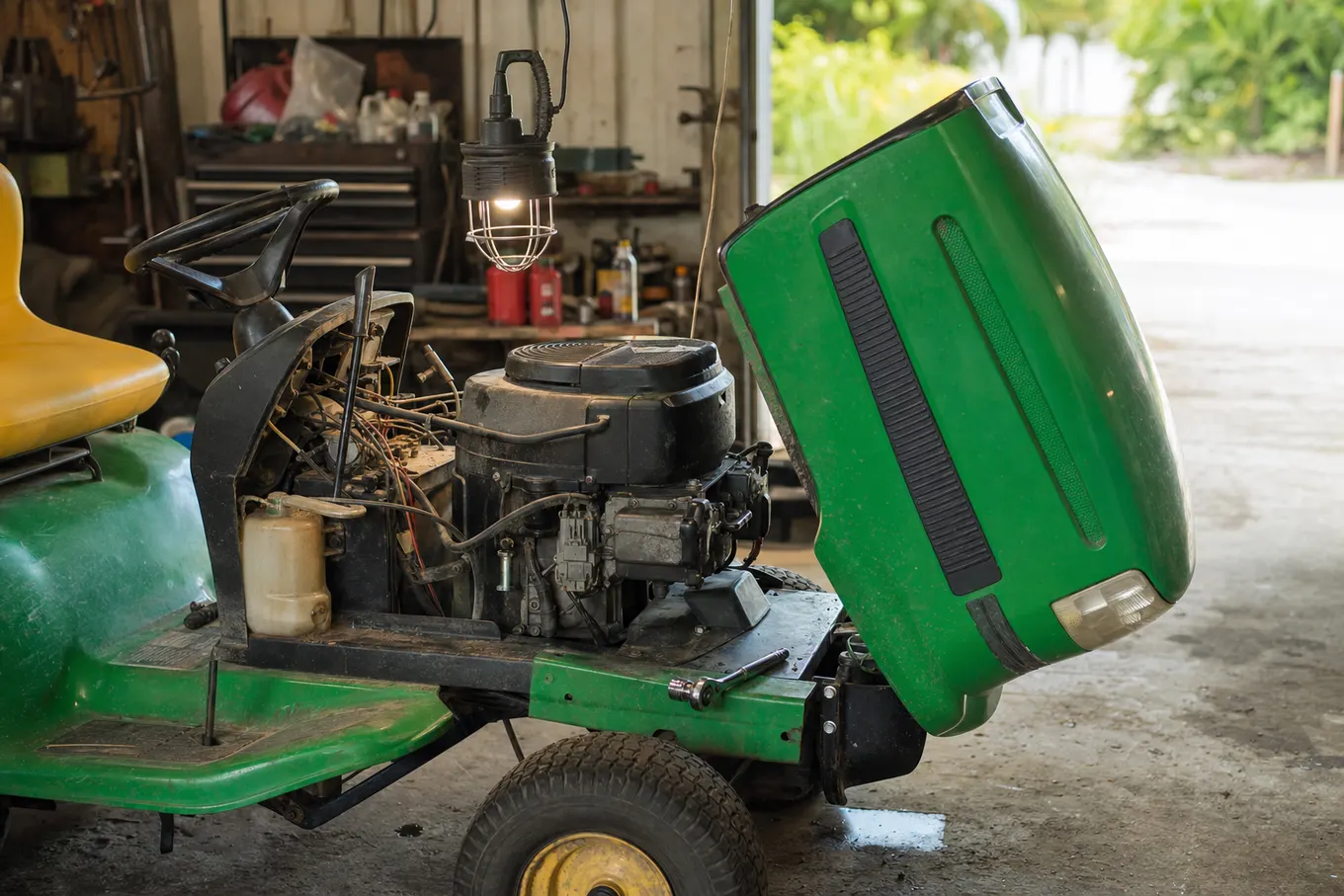
Need Craftsman mower repair in Port Charlotte? We service Craftsman push mowers, self propelled mowers, lawn tractors, T and LT series riders, and homeowner zero turns. That includes no-start complaints, carburetor trouble, deck noise, uneven cutting, belts, blades, batteries, starter circuits, safety switches, and routine service. You approve the quote before work starts, and pickup is available when getting the mower here is the hard part. If you are in Port Charlotte, Punta Gorda, North Port, Englewood, Rotonda West, Venice, Cape Coral, Fort Myers, Arcadia, or nearby Charlotte County communities, call or text the shop.
What a bench mechanic actually knows about Craftsman mowers
Craftsman is not one single mower design. That is the first thing a mechanic has to know before ordering parts or blaming the wrong part. The name on the hood stayed familiar while the actual platforms changed over time. Older Sears-era machines were often built by AYP or Husqvarna. Many newer Craftsman riders and walk behind mowers are MTD-built. Engines may be Briggs and Stratton, Kohler, or another common small engine family. Decks, controls, steering parts, and drive layouts can be completely different even when two red tractors look related from ten feet away.
That matters because a useful Craftsman diagnosis starts with the machine in front of us, not the badge. We check the model tag, engine family, deck layout, belt routing, safety circuit, and how the mower has been used in Southwest Florida. A Craftsman that cuts a small dry lot once a week ages differently from a lawn tractor hauling a cart over sugar sand with wet grass packed under the deck. The right answer may be a carburetor cleaning, a belt and pulley repair, a safety switch fault, a deck rebuild, or a polite warning that the mower is reaching the point where money should be spent carefully.
The platform split matters more than the paint color
On older Sears-era Craftsman tractors, the bones are often familiar to anyone who has worked on AYP or Husqvarna-built homeowner machines. You see the same general service logic: mechanical deck engagement on some units, common spindle and mandrel setups, simple steering hardware, and belt-driven deck systems that can usually be inspected without turning the job into a mystery novel. Those machines can be good repair candidates when the engine is healthy, the deck shell is not rotted out, and the transmission still pulls cleanly.
Modern MTD-built Craftsman mowers have their own patterns. Some use lighter deck hardware, different belt paths, different lift linkage, and different plastic or cable-operated controls. That does not make them bad mowers. It does mean you cannot diagnose a newer T series rider by memory from an older LT series lawn tractor. The belt that looks wrong may simply be routed around an idler that was added for that platform. The safety circuit may behave differently. The deck hangers may change the way pitch is adjusted.
For riding mower repair, this is why we start by identifying the platform and the failure pattern before buying parts. Craftsman owners often know the brand but not who built the unit. We do not expect you to know that. Bring the mower, the model tag if it is readable, and the symptom. The machine will usually tell the rest of the story once it is on the bench.
The first checks are boring because boring checks catch the real problem
A Craftsman that cranks but will not run does not automatically need a new carburetor. We look at fuel age, fuel flow, spark, compression, plug condition, the fuel solenoid if equipped, the kill wire, and the safety circuit. If the float bowl holds enough fuel to fire for a few seconds, then the engine dies, that points one way. If it has no spark until a switch is unplugged, that points another. Guessing costs money. Testing costs less drama.
Deck complaints get the same treatment. An uneven cut might be dull blades, but it can also be a bent blade, a low tire, a deck hung crooked, a worn spindle, a sagging lift link, packed clippings changing airflow, or a belt slipping under load. Craftsman decks are common enough that people assume every rough cut is the same repair. It is not. A mower that scalps on turns has a different story than one that leaves one tall strip down the middle.
General lawn mower repair is mostly pattern recognition backed by basic measurements. We check what the owner noticed, then we check what the mower is quietly admitting. That second part is where a lot of the repair value lives.
Craftsman build quality deserves a fair read
Craftsman earned its huge installed base by being familiar, available, and useful for normal homeowners. The brand has plenty of machines that are worth maintaining. It also has machines that were built to a price, especially after years of Florida sun, wet grass, sand, and storage neglect have had their say. Both things can be true. A mechanic who praises every mower is selling. A mechanic who calls every homeowner mower junk is showing off.
The older lawn tractors can be pleasantly simple. Many have serviceable decks, understandable wiring, and common engines. If they have been kept dry, not abused, and not left with old E10 fuel in the carburetor every summer, they can be practical machines. The weak spots are usually wear points: steering bushings, deck spindles, idler pulleys, belts, battery cables, seat switches, and linkages that loosen after years of vibration.
Newer units can still be sensible to repair, but the math depends more on condition. A clean mower with a clogged carburetor, bad battery, belt issue, or deck pulley problem is very different from a machine with a tired engine, cracked deck mounts, slipping transmission, brittle plastic controls, and wiring corrosion all at once. We are not here to make an old mower immortal. We are here to tell you which problems are ordinary repair work and which ones are the mower asking for retirement paperwork.
Parts are usually available, but the exact tag still matters
Craftsman parts availability is one reason older machines keep showing up at independent shops. Belts, blades, spindles, pulleys, cables, filters, plugs, fuel parts, starter solenoids, and many engine parts are often obtainable because so many machines were sold. Aftermarket support can be strong, especially for common deck sizes and common small engine families. That helps keep many repairs practical.
The catch is that Craftsman model numbers matter. Two mowers can share a hood shape and still use different belts, different blade lengths, different spindles, or different cable ends. Ordering by memory is how the wrong part ends up on the counter, still shiny, still useless. We verify the mower's tag, engine numbers, deck layout, and the failed part before treating a parts listing as gospel.
There are limits. Some cosmetic pieces, older plastic trim, certain deck shells, and specific obsolete controls may be hard to find or not worth chasing. If your mower is still inside factory warranty, the factory warranty channel is the right first stop. For out-of-warranty Craftsman service, we focus on what can actually be repaired well, using available parts that match the machine in front of us.
Southwest Florida ages Craftsman mowers in its own way
A Craftsman mower in Port Charlotte does not live the same life as one in a northern shed that runs for a short season and then sleeps in cold weather. Here, grass grows for much of the year. Summer brings wet, heavy clippings. E10 fuel sits in small carburetor passages and turns sticky. Sand works into deck bearings and pivot points. Salt air near the coast finds battery terminals, connectors, deck seams, and any bare metal it can bother.
Snowbird storage creates another pattern. A mower may sit for months with fuel in the tank, a battery slowly draining, tires losing pressure, and moisture doing quiet work under the deck. Then the owner comes back, the grass is high, and the machine is asked to behave immediately. That is a tough first day back at work.
On homeowner zero turns, we also watch the drive system, deck bearings, caster pivots, and electrical connections closely because a little corrosion or sand wear can turn into a mower that cuts poorly or steers badly. Our zero turn mower repair work has the same rule as Craftsman tractor work: find the root cause before stacking parts. The engine side gets its own attention too. A lot of Craftsman complaints are really small engine repair problems wearing a red hood.
The Craftsman problems owners usually notice first
Most Craftsman owners do not call with a part number. They call with a sentence: it starts and dies, it cuts crooked, it will not move, it clicks, it smokes, it eats belts, it was fine before we went north. That is the right way to start. Symptoms tell us where to look first, then testing keeps the repair from turning into a pile of guesses.
It cranks, fires, then dies like it changed its mind
The owner usually says the mower will run for a few seconds, only run on choke, start with spray, or crank all day without catching. On Craftsman push mowers, lawn tractors, and T series riders, that often points to fuel delivery before it points to anything dramatic. E10 fuel leaves varnish in the carburetor, the main jet clogs, the float needle sticks, the fuel solenoid does not open cleanly, the cap vent plugs, or the fuel line gets soft inside and restricts flow.
We still check spark, compression, the plug, the kill circuit, and safety switches because a mower can lie if you let it. A weak ignition coil can act heat sensitive. A seat or brake switch can interrupt spark. A valve issue can make a tired engine sound like a fuel problem. The repair may be a careful carburetor cleaning, a rebuild, a replacement carburetor, fresh fuel line, a plug, a valve adjustment, or wiring correction.
For a deeper look at this pattern, see lawn mower wont start and lawn mower carburetor repair. Prevention is simple but not always convenient: use fresh fuel, do not let gas sit through a long snowbird stretch, keep water out of the tank, and run the mower often enough that the carburetor does not become a tiny science project.
It runs fine but the lawn looks chewed instead of cut
This complaint usually sounds like uneven rows, ragged grass tips, one side cutting lower, clumps under the deck, or a strip the blades seem to miss. Craftsman decks are common, but the fix depends on the evidence. Sugar sand dulls blades fast. Wet St. Augustine clippings pack under the shell and ruin airflow. A bent blade, loose spindle, worn mandrel bearing, low tire, wrong deck pitch, stretched belt, or weak idler spring can all make the mower look guilty in different ways.
We start with the basics: blade condition, blade match, spindle play, deck shell condition, tire pressure, hanger points, belt tension, and whether the engine is holding blade speed under load. A sharp blade on a crooked deck still cuts crooked. A level deck with a slipping belt still leaves ugly grass. If the deck has been washed and parked wet, we also look for rust around mounting points and spindle pockets.
The fix might be sharpening or replacing blades, correcting deck pitch, cleaning packed material, replacing spindles or pulleys, installing the right belt, or tightening loose deck hardware. To prevent it, avoid mowing when the grass is soaked if you can, keep blades sharp, scrape the deck safely after heavy cutting, and do not ignore new vibration. Vibration is the mower tapping you on the shoulder before a more expensive part joins the conversation.
It will not drive, throws belts, or makes the deck sound expensive
A Craftsman rider that runs but will not move is usually described as dead in gear, weak on slopes, slow after warming up, or suddenly freewheeling. Sometimes the issue is as plain as a drive belt off the pulley. Other times the belt is glazed, stretched, installed wrong, or being chewed by a seized idler. Linkage can be out of adjustment. A brake can hang up. On hydrostatic units, a weak transmission has to be separated from a belt or control problem before anybody spends money in the wrong place.
Deck drive complaints have a cousin pattern. The blades stop in tall grass, the belt smokes, the engagement lever feels wrong, or the deck starts rattling like a coffee can full of bolts. We inspect the belt path, idlers, pulleys, spring tension, blade spindles, engagement cable or PTO hardware, and every guard or bracket that keeps the belt where it belongs. Craftsman decks often give clear clues if you look at rub marks and pulley wear.
Our lawn mower belt and deck repair work is symptom-first for this reason. Replacing a belt without checking the pulley that destroyed it is just scheduling the next failure. Prevention means cleaning the deck, replacing noisy pulleys before they lock up, using the correct belt profile, and stopping the mower when a new squeal or burning rubber smell shows up.
It clicks, drains the battery, or acts haunted by the key switch
Electrical complaints on Craftsman mowers often start with one click, a slow crank, a battery that will not stay charged, a fuse that opens, or a mower that only starts when the key is held just right. Age and moisture do not help. Battery posts corrode. Grounds loosen. Solenoids burn. Key switches wear. Safety switches at the seat, brake, clutch, or blade engagement circuit can fail or get knocked out of adjustment. Harness connectors can turn green inside where you cannot see it from above.
We test voltage at the battery, voltage drop through the cables, solenoid operation, starter draw, charging output, fuse condition, switch continuity, and the safety circuit. That sounds fussy, but it beats installing a battery on a mower that actually has a charging problem. It also beats replacing a starter when the real fault is a corroded ground cable doing a bad impression of a major repair.
For this pattern, lawn mower electrical repair is about proving the circuit. The prevention side is not glamorous: keep terminals clean, store the mower dry, charge the battery during long sitting periods, and do not bypass safety switches. Bypasses can make diagnosis harder, and more importantly, they can make the mower unsafe.
Repair versus replace on a Craftsman mower comes down to the core machine. If the engine is healthy, the deck shell is solid, the transmission pulls, and parts are available, many older Craftsman machines deserve a fair repair quote. If the engine is tired, the deck is cracked or rotten, the drive is weak, and several systems are failing at once, we will say that before you approve work. The best repair is the one that still makes sense after the mower is back in your yard.
What We Service on Craftsman Machines
Full diagnosis and repair
Any symptom, tracked to its actual cause before a single part goes on.
Full guideTune ups
Oil, plug, filters, blades and a complete go-over on the Florida schedule.
Full guideCarburetors and fuel
Ethanol varnish is brand-agnostic. Cleaning, rebuilds and replacements.
Full guideElectrical systems
Batteries, starters, solenoids, charging and safety switches.
Full guideBelts, decks and spindles
Cut quality lives under the machine. We keep it true.
Full guidePickup and delivery
Dead machines ride free of drama. We come get them.
Full guideCraftsman Owners Across Four Counties
Based in Port Charlotte, serving the whole 30 mile circle. See the full service area.
Asked at the Counter
Is an older Sears-era Craftsman riding mower worth fixing?
Often, yes, if the engine is healthy, the deck shell is solid, and the transmission still pulls properly. Older Sears-era Craftsman tractors can be simple, serviceable machines. The answer changes fast if the mower has low compression, a rotten deck, slipping drive, and wiring corrosion all together. We inspect first, then tell you whether repair money makes sense.
Who services Craftsman mowers in Port Charlotte without a dealer visit?
Joe's Small Engine Repair is an independent mowers-only shop in Port Charlotte that services out-of-warranty Craftsman push mowers, self propelled mowers, lawn tractors, T series riders, LT series riders, and homeowner zero turns. We do not claim factory warranty status. For normal repair work, we diagnose the mower, quote before work starts, and offer pickup when available.
Why does my Craftsman mower start and then die after a few seconds?
That short run time usually means the engine is getting just enough fuel to fire, then starving. Common causes include stale E10 fuel, a clogged main jet, a sticking float needle, a plugged fuel cap vent, a restricted fuel line, or a fuel solenoid that is not opening cleanly. Spark and safety circuits still need testing before blaming the carburetor.
Can you still get parts for older Craftsman lawn tractors?
Many common wear parts are still available because Craftsman sold a huge number of machines. Belts, blades, spindles, pulleys, filters, plugs, solenoids, and many engine parts are often obtainable. Exact model information matters because similar-looking mowers can use different parts. Cosmetic trim, old plastic pieces, and some discontinued deck shells can be harder to source.
My Craftsman riding mower engine runs but the mower will not move. What causes that?
Start with the drive system before assuming the transmission is finished. A thrown drive belt, glazed belt, seized idler pulley, weak spring, misadjusted linkage, stuck brake, or freewheel lever issue can all stop motion while the engine runs normally. If those checks pass, then the transmission itself gets tested. The order matters because belts are much simpler than transaxles.
Why is my Craftsman mower cutting unevenly after I changed the blades?
New blades do not fix a crooked deck. Uneven cutting after blade replacement can come from low tire pressure, a bent blade, mismatched blades, deck pitch out of adjustment, worn spindle bearings, packed grass under the shell, a slipping belt, or loose deck hangers. We check the whole cutting system so one shiny new part does not hide the real problem.
Do you work on Craftsman battery mowers?
We can look at many Craftsman battery mower complaints, especially blade, wheel, handle, switch, cleaning, and basic electrical issues. Battery platforms vary, and some electronic modules are not practical to repair outside the manufacturer's parts system. If the problem points to a sealed battery, charger, or control board, we will tell you what is realistic before work begins.
Should I repair a modern Craftsman T series rider or replace it?
A modern T series rider is worth evaluating before you replace it. A carburetor issue, bad battery, belt failure, deck pulley, dull blades, or safety switch fault can be ordinary repair work. Replacement starts making more sense when the engine, deck, drive, wiring, and controls are all failing together. We separate normal wear from a mower that is stacking problems.
Get Your Craftsman Back on the Lawn
Describe the symptom and we will give you the straight answer: what it likely is, what it costs, and how fast.
- Quotes approved by you before any work
- Pickup and delivery available
- Or call now: (941) 555-0123