Husqvarna Mower Repair in Port Charlotte, FL
Husqvarna mowers are common around Port Charlotte because they cover a lot of ground without feeling like farm equipment. YTH lawn tractors, Z200 zero turns, and older AYP family machines can be good homeowner mowers, but they have patterns a general repair counter can miss. We work on lawn mowers only, so the repair starts with the deck, belt path, fuel system, safety circuit, and the way the machine actually gets used in Southwest Florida grass.
Independent repair shop. Not affiliated with or authorized by Husqvarna; the name is used only to describe the machines we service.
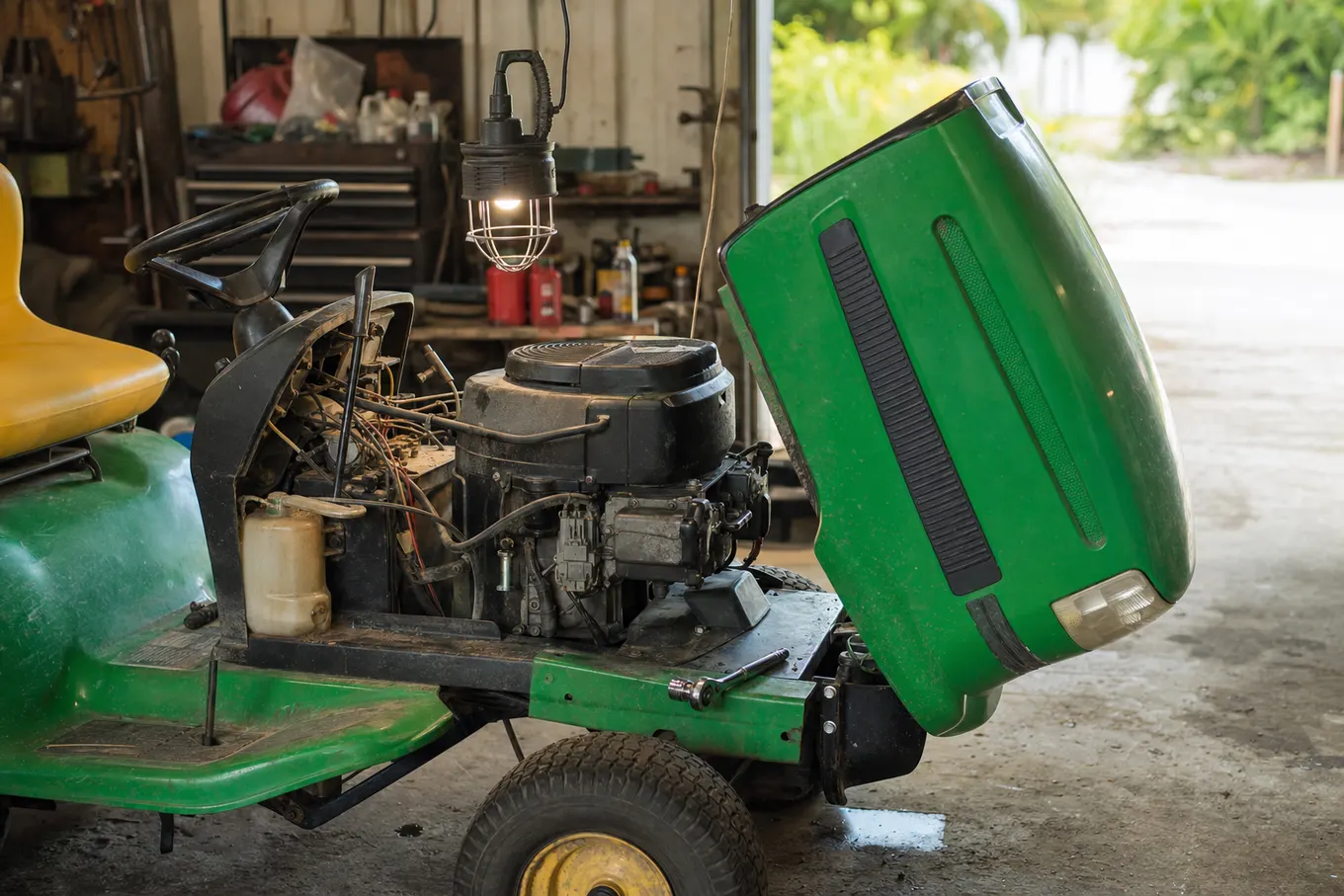
Need Husqvarna mower repair in Port Charlotte? We service Husqvarna riding mowers, lawn tractors, zero turns, push mowers, self propelled mowers, and the common small engine problems that keep them parked. You get a quote before work starts, not a surprise after the mower is already torn apart. Pickup and delivery are available when the mower is too large, too dead, or too annoying to load. If you are in Port Charlotte, Punta Gorda, North Port, Englewood, Rotonda West, Venice, Cape Coral, Fort Myers, or nearby Charlotte County communities, call or text the shop.
What a mower mechanic checks on Husqvarna equipment before guessing
A Husqvarna hood tells us the brand. It does not tell us the whole repair. The useful clues are underneath: which deck is fitted, how the belt is routed, what engine tag is on the machine, whether the transaxle has been cooking in grass clippings, and how many seasons of Florida heat have worked on every rubber and plastic part. That is why a real Husqvarna diagnosis is more than saying carburetor, battery, or belt and hoping the first part fixes it.
On the bench, we treat the machine as a whole system. A no start can be fuel, spark, compression, a safety switch, a weak battery cable, or a fuel solenoid that clicks but does not behave under load. A poor cut can be blades, deck pitch, spindle play, tire pressure, bent deck hangers, belt slip, or wet Bahia grass packed into the shell. A drive complaint can be a belt, idler, transaxle fan, linkage, brake release, or years of heat. The value is knowing which order to check those things, so your mower does not become a parts cannon.
Platform and series realities: YTH, Z200, and the AYP family
Many Husqvarna lawn tractors in this area fall into the YTH style of homeowner riding mower. They are built for normal residential mowing, yard cleanup, and the kind of weekly work a Port Charlotte lawn needs most of the year. They are not meant to be treated like commercial machines that run all day, every day, but they can be very useful when the deck stays level, the belts stay aligned, and the cooling areas stay clean.
The Z200 zero turn family has a different personality. It is faster, turns sharper, and asks more from the deck belt system because the operator can swing around trees, fence lines, culverts, and drainage edges without slowing down much. That sharper movement is exactly why we look closely at idlers, belt guides, deck pulleys, and spindle bearings. A zero turn that feels powerful can still cut badly if one spindle is loose or the belt is riding wrong in a pulley.
Older Husqvarna machines also overlap with the wider AYP platform family that showed up under several familiar homeowner brands. That matters because the shape of the deck, the spindle pattern, the cable routing, and the way parts are cataloged can look very familiar once the mower is open. The name on the hood helps, but the product tag and the physical layout matter more. For broader service context, our general lawn mower repair page explains how we approach mower problems by system instead of by guesswork.
Watch points we check first on Husqvarna mowers
Deck spindles are one of the first places we put our hands. A spindle can sound fine at idle and still have enough bearing play to make the blade wobble under grass load. That wobble becomes a ragged cut, a belt that walks, or a pulley that never quite tracks straight. We do not call a deck good because it spins. We check side play, vertical movement, pulley condition, blade fit, shell damage, and the hardware that holds the deck where the factory intended it to sit.
Belts and idlers get the same attention. Husqvarna routing is usually logical, but a belt that has been replaced once or twice by the wrong length, wrong profile, or wrong route can fool the next person. The mower may engage on the driveway, then slip in thick St. Augustine. It may throw a belt only after a tight turn. It may smoke for five seconds and then seem normal. That little performance drama tells us where to look.
We also check the simple items that create expensive symptoms. A loose battery ground can imitate a bad starter. A seat switch can cut spark when the frame flexes. A packed cooling screen can make a healthy engine run hot. A cracked fuel line can starve the engine only when the tank is half empty. On riding lawn mower repair jobs, those small details often decide whether the fix is straightforward or the mower keeps coming back with the same complaint wearing a new name.
Build quality truths without the sales brochure
Husqvarna homeowner mowers are not junk, and they are not magic. The honest middle is where most repairs live. A YTH tractor that gets clean fuel, sharp blades, belt attention, and dry storage can do its job well. The same machine, left with old ethanol fuel, a deck packed with sandy clippings, and a battery that dies every few months, can feel worn out long before the main engine is actually done.
The decks are capable, but they need help. Florida lawns are not soft carpet. Bahia stems, crabgrass, wet summer growth, sandy soil, and sprinkler ruts beat up blades and deck hardware. If the deck is out of level, a Husqvarna may leave one tall stripe and one scalped stripe that makes the whole yard look uneven. That is not always a bad mower. Sometimes it is a tired blade set, low tire, loose hanger, worn spindle, or a deck that needs a careful reset.
Z200 machines bring the usual zero turn tradeoff. They are quick and comfortable once you get used to them, but speed can hide damage. A homeowner can clip a root, bounce through a sandy washout, or turn too tightly in wet grass, then notice the mower cutting worse two weeks later. Our zero turn mower repair work is built around that symptom trail. We listen to how the mower changed, not just what part looks dirty today.
Parts availability and why the product tag matters
For many Husqvarna and AYP family homeowner mowers, routine wear parts are still realistic to source. Blades, belts, pulleys, spindles, filters, cables, switches, and fuel system parts are usually not exotic. The catch is that almost right is still wrong. A deck belt that is a little off can jump. A spindle that bolts up but uses the wrong pulley height can make a new belt fail. A blade that looks close can leave a poor cut or hit the deck shell.
That is why we care about the product tag, serial information, engine tag, and the actual part in our hands. The internet may show ten parts that all claim to fit. A mower only needs one that truly fits. We would rather slow down at the lookup stage than install a near match and pretend the squeal is just normal break in.
Parts reality also affects repair decisions. If a mower needs common maintenance items, the path is usually clear. If it needs an expensive transaxle, damaged deck shell, or multiple aged electrical pieces at the same time, we talk through that before the repair grows legs. For engine side work, our small engine repair page explains how we separate mower problems from engine problems before quoting.
How Southwest Florida ages a Husqvarna mower
Southwest Florida does not let a mower retire for winter. Grass slows down, then wakes back up, then the wet season arrives and the deck starts swallowing heavy clippings again. Year round use means a Husqvarna can rack up wear without the owner noticing a single dramatic failure. Belts glaze a little. Cables stiffen. Batteries get weak. Fuel sits just long enough to varnish a carburetor. Bearings collect sandy grit. Then one Saturday the mower acts like it failed all at once.
Ethanol fuel is a regular troublemaker. The float bowl can hold enough fuel for a short start, then the mower dies as soon as it needs steady flow. A snowbird mower can sit through months of heat with old gas in the bowl and tank. By the time it comes back into service, the carburetor may be sticky, the fuel line may be soft, and the tank may smell like old varnish instead of gasoline.
Salt air and humidity add their own slow damage near the coast and canals. Electrical terminals corrode. Ground points get crusty. Deck hardware rusts into place. A machine stored under a carport can still be damp every morning. The fix is not fear. It is steady maintenance: clean the deck, keep fuel fresh, charge the battery, watch the belts, sharpen blades before they are butter knives, and get small symptoms checked before they turn into a full driveway autopsy.
How the symptom sounds before the wrench comes out
Most Husqvarna repairs start with a sentence from the owner that sounds simple. It cranks but will not start. It starts and dies. It cuts lower on one side. The belt keeps jumping. The blades quit when the grass gets thick. It only clicks. The useful part is not just the complaint. It is when the problem happens: cold start, hot restart, PTO engagement, uphill turns, wet grass, after storage, after a blade hit, or after somebody replaced a belt in the driveway.
We use that story to choose a test path. A mower that failed after sitting gets a different first look than one that lost cut quality after striking a root. A zero turn that drives fine cold but fades hot points us in a different direction than a tractor that will not move at all. Good diagnosis keeps the repair smaller. It also keeps a decent Husqvarna from being written off because the first guess was wrong.
No start, starts then dies, or only runs on choke
The owner usually says the mower ran last season, ran last month, or ran yesterday, and now it cranks like it wants to help but refuses to work. Sometimes it fires for two seconds because the float bowl still has just enough fuel to tease everybody. Sometimes it runs only with the choke on. Sometimes it starts after sitting overnight, then dies hot and will not restart until everyone is annoyed.
On Husqvarna homeowner machines around Port Charlotte, we look hard at old ethanol fuel, restricted carburetor passages, a sticking float needle, a plugged fuel filter, cracked fuel line, weak spark, safety circuit interruption, and battery cables that pass a casual glance but fail under load. A carburetor problem is common, but it is not the only answer. Our lawn mower wont start page lays out the broader no start path, and our lawn mower carburetor repair page covers the fuel side in more detail.
The fix depends on what fails testing. We clean or repair the fuel system when it is worth doing, replace soft lines and filters when they are suspect, confirm spark and safety operation, and make sure the engine is not being blamed for a wiring problem. Prevention is boring, which is why it works: fresh fuel, shutoff or run dry before storage when appropriate, a charged battery, and no six month mystery gas in the tank.
Uneven cut, missed strips, scalping, or a deck that sounds rough
This complaint usually arrives after the yard starts looking bad even though the mower still runs. One side cuts low. One blade seems to miss. The mower leaves a fuzzy stripe. The deck sounds louder than it used to. The owner may have already sharpened blades and found that the cut improved for one mow, then went right back to ugly.
On Husqvarna decks, we check blade condition, blade match, spindle bearings, pulley wobble, deck shell bends, hanger wear, deck pitch, belt tension, tire pressure, and buildup under the shell. That last one matters here. Wet summer grass mixed with sand can pack hard enough to change airflow. A deck that cannot lift grass cleanly will cut like a tired mower even with a healthy engine.
We fix the mechanical reason, not just the visible symptom. That can mean sharpening or replacing blades, replacing a spindle, correcting deck level, clearing packed buildup, adjusting hangers, or tracing a belt slip that only shows up in heavy grass. To prevent the repeat, keep the underside cleaner than you think is necessary, sharpen blades before the tips are rounded off, and do not ignore a deck that gets louder each week.
Belt keeps coming off, blades quit, or the mower will not drive right
The driveway version of this problem is usually, the belt is new and it still came off. That does not mean the belt was the wrong repair, but it does mean the belt was not the whole story. Belts jump when pulleys wobble, guides are bent, idlers are weak, spindles drag, the deck is misaligned, debris gets packed into the path, or the routing is slightly wrong.
On riding Husqvarna machines, drive complaints can come from the ground drive belt, brake release, linkage, pulley wear, transaxle cooling fan, or a tired transaxle. Deck complaints can come from a belt that looks fine until the PTO loads it, then slips because the pulley faces are glazed or an idler is not holding pressure. Our lawn mower belt and deck repair work focuses on that whole belt path instead of treating the belt as a disposable fuse.
The fix may be as small as correcting the routing and replacing a damaged guide, or as involved as spindle and idler work. Prevention means cleaning out the deck and pulley areas, replacing belts with the correct profile, slowing down when the deck is swallowing wet grass, and stopping after a belt event instead of mowing until the shredded cord wraps around everything it can reach.
Clicks, dead battery complaints, PTO issues, and age related electrical trouble
Electrical complaints on Husqvarna mowers often get blamed on the battery first. Sometimes that is fair. Sometimes the battery is the victim. A corroded ground, tired solenoid, loose cable, failing key switch, weak charging output, damaged PTO switch, or safety interlock problem can make a fresh battery look guilty in two days.
The owner description gives us useful clues. A single click points one way. Repeated clicking points another. A mower that dies when the blades engage can be electrical, mechanical, or both. A mower that shuts off when the operator shifts weight in the seat is probably telling the truth about a safety circuit. A machine that starts with a jump but will not stay charged needs more than a battery receipt.
We test voltage drop, grounds, switch behavior, charging output, and the components tied to the symptom. We also look for rubbed wires near moving parts and corrosion where humidity has been working quietly. Our lawn mower electrical repair page covers the kind of testing that separates a dead battery from the reason the battery keeps dying. Prevention is simple enough to say and easy to skip: keep terminals clean, store the mower dry, charge the battery during long idle periods, and investigate new clicking before it becomes silence.
Repair or replace is not a loyalty test. A Husqvarna with a solid engine, sound deck, available parts, and one clear failure is often a sensible repair candidate. A machine with a rotten deck shell, tired transaxle, weak electrical system, bad tires, and a fuel problem all at once deserves a plain conversation before money goes into it. We quote before work because the right answer is the one that fits the mower in front of us, not the one that sells the longest repair ticket.
What We Service on Husqvarna Machines
Full diagnosis and repair
Any symptom, tracked to its actual cause before a single part goes on.
Full guideTune ups
Oil, plug, filters, blades and a complete go-over on the Florida schedule.
Full guideCarburetors and fuel
Ethanol varnish is brand-agnostic. Cleaning, rebuilds and replacements.
Full guideElectrical systems
Batteries, starters, solenoids, charging and safety switches.
Full guideBelts, decks and spindles
Cut quality lives under the machine. We keep it true.
Full guidePickup and delivery
Dead machines ride free of drama. We come get them.
Full guideHusqvarna Owners Across Four Counties
Based in Port Charlotte, serving the whole 30 mile circle. See the full service area.
Asked at the Counter
Is a Husqvarna riding mower worth fixing?
Often, yes, if the engine is sound, the deck is not badly damaged, and the repair is limited to normal wear items like belts, spindles, blades, fuel parts, cables, or electrical pieces. If the mower needs several major repairs at once, we slow down and talk it through before work starts. The goal is a useful mower, not a repair bill that makes no sense.
Can an independent shop service my Husqvarna mower without being a dealer?
Yes for paid repair and maintenance. An independent mower shop can diagnose no starts, deck trouble, belts, spindles, electrical faults, fuel problems, blade issues, and regular service on Husqvarna machines. Factory warranty work is different and should go through the dealer or warranty channel. For out of warranty repairs, we handle the practical shop work and quote before starting.
Do you repair Husqvarna zero turn mowers near Port Charlotte?
We work on Husqvarna zero turns, including common Z200 style homeowner machines, as long as the job fits normal mower repair scope. Typical repairs include deck belts, spindle noise, rough cut complaints, starting trouble, battery and charging issues, control concerns, and maintenance. If the mower is too large or too dead to bring in easily, call or text the shop about pickup.
Why does my Husqvarna mower crank but not start after sitting?
Old fuel is a common reason, especially with ethanol gas in Florida heat. The mower may crank well and still have a restricted carburetor, stuck float needle, plugged fuel filter, weak spark, or a safety switch interrupting the start circuit. We test the fuel and ignition side before blaming one part. Sitting creates several small problems that can look like one big failure.
Why does my Husqvarna deck keep throwing belts?
A belt that keeps coming off is usually a symptom, not the full diagnosis. We check pulley alignment, spindle play, idler tension, belt guides, deck level, debris buildup, and whether the correct belt is installed. A slightly bent guide or worn pulley can ruin a new belt fast. Replacing the belt again without finding the cause just resets the clock.
Are parts available for older Husqvarna and AYP family mowers?
Many normal wear parts are still available for older Husqvarna and related AYP family machines, but the exact product tag matters. Belts, blades, pulleys, switches, cables, and spindles can look similar across several models while fitting differently. We verify the mower information and the physical part before ordering so a near match does not create another repair.
Should my Husqvarna mower go to a dealer for warranty work?
If the mower is still under factory warranty, start with the dealer or the brand's warranty process. That protects the paperwork and keeps the warranty decision where it belongs. If the mower is out of warranty, or if the issue is normal maintenance, wear, fuel trouble, belts, blades, or electrical diagnosis, an independent mower shop is usually the simpler route.
How long can a Husqvarna mower last in Southwest Florida?
Age matters less than condition. A Husqvarna that gets clean fuel, sharp blades, deck cleaning, belt checks, battery care, and dry storage can remain useful for a long time. A mower left outside with old gas, sandy deck buildup, weak battery cables, and dull blades can feel worn out early. We judge the machine in front of us before recommending repair or replacement.
Get Your Husqvarna Back on the Lawn
Describe the symptom and we will give you the straight answer: what it likely is, what it costs, and how fast.
- Quotes approved by you before any work
- Pickup and delivery available
- Or call now: (941) 555-0123