Snapper Mower Repair in Port Charlotte, FL
Snapper mowers have a loyal following around Port Charlotte for a reason. The rear engine riders fit tight Florida lots, the Hi-Vac walk-behinds pick up cleaner than many box-store mowers, and older machines are often simple enough to deserve a real diagnosis before anyone gives up on them. We work on Snapper as an independent mower-only shop, with attention to the fuel, deck, drive, and age issues that usually decide whether the repair makes sense.
Independent repair shop. Not affiliated with or authorized by Snapper; the name is used only to describe the machines we service.
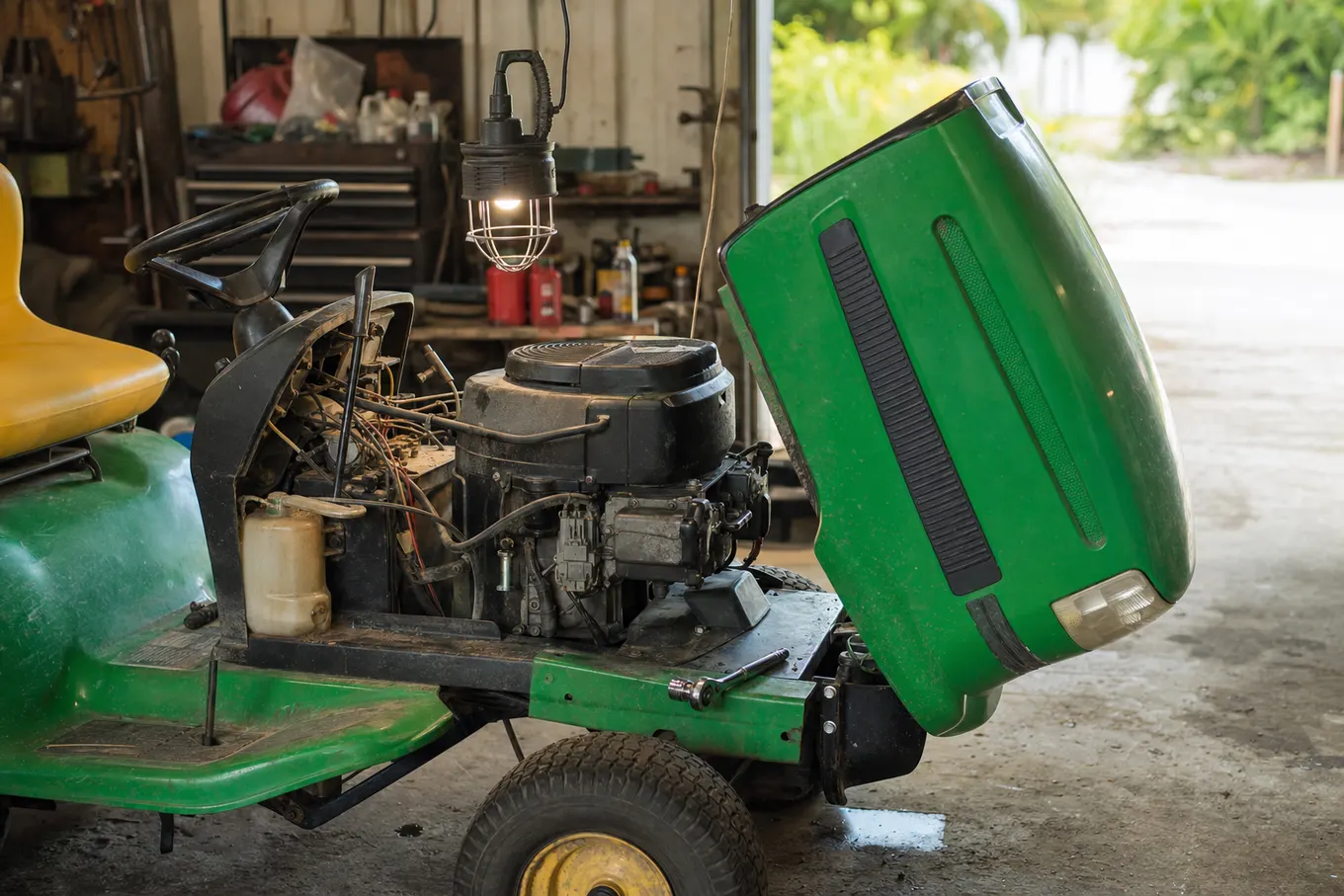
Need Snapper mower repair in Port Charlotte? We service Snapper push mowers, self propelled mowers, Hi-Vac walk-behinds, rear engine riders, lawn tractors, and residential mower setups that fit our shop. We are not a dealer, and factory warranty decisions belong with dealers. For normal out-of-warranty repair, maintenance, no-start diagnosis, deck work, belts, blades, electrical checks, and pickup needs, we can inspect the machine and quote the work before turning the first bolt. If you are in Port Charlotte, Punta Gorda, North Port, Englewood, Rotonda West, Venice, Cape Coral, or nearby, call or text the shop.
What a bench mechanic actually watches on Snapper mowers
Snapper repair is its own conversation because the brand covers more than one personality. The old rear engine rider crowd is different from the Hi-Vac walk-behind crowd. A compact rider that has spent years trimming around lanais in a retirement community does not fail like a self propelled mower that bags wet Bahia every Saturday. Same badge, different habits, different wear.
The right way to look at a Snapper is to start with what the machine was built to do. Rear engine riders are valued because they are compact, direct, and familiar. Hi-Vac walk-behinds earn their keep when the deck, blade, bagging path, and engine speed are all doing their jobs. Many Snapper machines also live in the Briggs and Stratton parts world, which can help with common service pieces. That does not mean every old mower is automatically worth saving. It means the machine deserves a careful look before the answer becomes yes or no.
The rear engine rider is the Snapper everyone remembers
Snapper rear engine riders are common in Florida neighborhoods where the yard is too much for a push mower but a big lawn tractor feels silly. The layout is simple to understand: engine behind the seat, compact frame, small turning footprint, and controls that many owners have used for years. People like them because they fit around sheds, palms, pool cages, and narrow side yards without feeling like farm equipment moved into the subdivision.
That simplicity is also why diagnosis has to stay practical. A rear engine rider that will not move may have a drive, belt, chain, disc, tire, clutch, brake, or adjustment issue depending on the exact setup and age. A mower that cuts poorly may not have a sick engine at all. It may have a worn blade, deck pitch problem, spindle wear, tire pressure issue, or a deck packed with Florida grass paste. A no-crank complaint may be battery, switch, solenoid, ground, brake switch, seat switch, or wiring.
We treat these machines like small riders, not like oversized push mowers. Our broader riding mower repair work applies here because the whole machine matters: engine, deck, drive, frame, tires, controls, charging, and safety circuit. A rear engine rider can be very worth fixing when the frame and deck are sound. It can also become a poor bet when age has hit every system at once.
Hi-Vac walk-behinds need airflow, not wishful thinking
A Snapper Hi-Vac mower is built around moving air and clippings. When everything is right, it can bag cleanly and leave a tidy cut. When the underside is packed, the blade is rounded, the bag path is restricted, or the engine is not holding speed, the mower starts acting weak even if the engine still has life. Owners usually describe it as poor suction, clumping, grass left behind, or the bag not filling the way it used to.
The first checks are simple but easy to skip. We look at blade condition, blade fit, deck buildup, discharge and bagging path, air filter, fuel quality, engine speed under load, wheel height adjusters, and whether the mower is being asked to mulch or bag soaked grass at the wrong height. A Hi-Vac deck cannot breathe through a mat of damp St. Augustine and sand. No mower can. Some just complain more honestly.
For walk-behind Snapper work, our general lawn mower repair process still applies: inspect the symptom, prove the cause, and avoid replacing parts because a guess sounded confident. On these machines, cut quality and engine load often talk to each other. A dull blade can make the engine sound tired. A restricted carburetor can make the deck look guilty. Both need to be checked in order.
The best Snapper traits are practical, not magical
Snapper has made plenty of homeowner mowers that are refreshingly serviceable. The better machines are not famous because they were fancy. They are liked because a person can understand them, maintain them, and keep them earning their spot in the garage. That is a real strength. A compact rider with a sound frame, a healthy engine, and a clear parts path can make more sense than buying a flimsy replacement just because the old mower needs belts, fuel work, or deck attention.
The fair warning is that age does not care about brand loyalty. A mower can have a good name and still have a rusted deck, sloppy steering, tired bushings, worn tires, cracked wiring insulation, fuel system varnish, weak compression, and fasteners that have not moved since before the current owner bought the house. At that point, the badge is only one vote in the room.
We are not here to flatter the mower or insult it. We look at the mechanical truth. If the engine is worth supporting, the deck is safe, the drive can be repaired cleanly, and parts are available, Snapper machines can be good candidates for service. If the repair list turns into a scavenger hunt, we say that before you approve work.
Parts for older Snapper machines are possible, but not guaranteed
Parts availability is one reason older Snapper machines still show up for repair. Common Briggs and Stratton engine service parts, blades, belts, cables, filters, wheels, switches, solenoids, and other normal wear items can often be found through regular channels. That gives many machines a fair chance. It also keeps small problems from becoming replacement decisions too early.
The tricky part is the word older. Rear engine riders have changed across generations, and not every deck, drive part, plastic piece, bracket, handle, bagging part, or electrical component is sitting on a shelf waiting for us. Sometimes an aftermarket part is fine. Sometimes original fit matters. Sometimes the needed piece exists but the rest of the mower is too tired to justify building around it. The parts conversation has to include the whole machine, not just the part number.
That matters even more on rider and specialty repairs. A belt is normal. A belt plus weak charging, bad tires, deck bearings, fuel trouble, steering wear, and corroded wiring is a bigger decision. If your Snapper is a residential zero turn rather than a rear engine rider, the same value check applies, and our zero turn mower repair page explains why deck, drive, and electrical diagnosis get more involved as the machine gets more complex.
Southwest Florida is rough on Snapper mowers in predictable ways
Port Charlotte is not gentle on lawn equipment. Mowers run most of the year, sit through hot storage, breathe sandy dust, get rained on, and live near salt air if the owner is close enough to the coast. E10 fuel is a constant carburetor troublemaker, especially for snowbirds who leave a mower parked for months and expect it to wake up like nothing happened. The mower may forgive that once. It usually keeps receipts.
Sugar sand dulls blades and works into bearings, pivots, linkages, cables, deck hardware, and wheel assemblies. Wet season grass packs under decks and around belts. Heat shortens battery life and dries rubber parts. Salt air finds electrical terminals and exposed metal. A rear engine rider parked outside under a tired cover can age faster sitting still than it does mowing.
That is why Snapper repair here starts with fundamentals. Fuel, air, spark, oil, cooling airflow, blade load, belt condition, battery health, grounds, safety switches, tire pressure, and deck buildup all get attention before the big conclusions. Our small engine repair work overlaps heavily with Snapper because many complaints that sound brand-specific are really Florida storage, fuel, and heat issues wearing a familiar badge.
The bottom line is that Snapper machines reward honest inspection. A rear engine rider with a solid deck and one clear failure can be worth keeping alive. A Hi-Vac walk-behind with a good engine and a dirty, dull, restricted cutting system may just need the right service. But a machine with age stacked in every corner needs a different conversation. We quote before work starts because the truth is cheaper before the parts order.
The Snapper repair jobs that roll through the door
Most Snapper owners do not describe the problem in shop language. They say it starts then quits, the rider will not move, the bag does not fill, it cuts ugly, it just clicks, or it ran fine before they went north for the season. That is useful information. The symptom tells us where to start, but it does not get to choose the part.
It starts, runs a few seconds, then dies
This is the classic storage complaint. The owner puts fresh gas in a Snapper that has been sitting, gets a short burst of hope, and then the engine shuts off. Sometimes it will run only with choke. Sometimes it surges. Sometimes it fires on spray and dies as soon as the spray is gone. Around here, old E10 fuel and heat-soaked carburetors are usually near the front of the line.
We check the tank, fuel flow, fuel line, carburetor bowl, main jet, air filter, spark strength, oil condition, and whether the blade or deck is dragging the engine down. The float bowl can hold enough fuel to start briefly even when the carburetor cannot keep feeding the engine. That is why a few seconds of running does not clear the fuel system.
The fix may be carburetor cleaning, a rebuild, fuel line work, filter service, contaminated oil correction, choke or governor adjustment, or a full tune path if the mower has been neglected. Our mower will not start and carburetor repair pages cover the same chain in more detail. Prevention is simple: clean fuel, sensible storage, and no heroic rope-pulling after the engine has already explained itself.
The Hi-Vac deck quits picking up cleanly
A Snapper Hi-Vac complaint often starts with the bag. It does not fill, it leaves grass behind, it clumps at the discharge, or the mower seems to drag through thick grass. The owner may think the engine has lost power, and sometimes it has. Just as often, the deck is not moving air because the cutting system is loaded, dull, blocked, or set up poorly.
We inspect the blade edge, blade bend, blade fit, deck underside, bagging path, chute, height adjusters, wheel condition, engine speed, air filter, and fuel delivery under load. Wet St. Augustine and Bahia seed stalks make this worse. So does mowing too low after a week of summer rain. A Hi-Vac deck can only lift and move clippings if it has airflow.
The repair may be sharpening or replacing the blade, cleaning the deck, correcting a height problem, servicing the engine so it holds speed, repairing a wheel or adjuster, or clearing a bagging restriction. Prevention is regular blade service, deck cleaning before buildup turns into concrete, and mowing at a height that matches Florida grass instead of punishing the mower for growing season doing what growing season does.
The rear engine rider will not drive, throws belts, or cuts unevenly
Rear engine rider complaints can sound unrelated until the machine is on the bench. One owner says it will not move. Another says it jerks. Another says the belt came off again. Another says the deck cuts lower on one side. On these compact riders, drive and deck problems can overlap because belts, idlers, pulleys, tires, brake adjustment, and deck position all live close together.
We check belt condition, routing, pulley wear, idler movement, brake release, drive engagement, tire pressure, wheel hardware, deck hangers, blade condition, spindle play, and deck pitch. A soft tire can look like a bent deck. A worn idler can ruin a new belt. A packed deck can make the engine labor and convince the owner the drive is weak. The mower needs measurements, not a lecture.
The fix may be belt replacement, idler or pulley work, brake or clutch adjustment, deck leveling, blade service, spindle repair, tire correction, or drive diagnosis. Our belt and deck repair page fits many of these symptoms. Prevention is cleaning debris from belt areas, noticing belt dust or squeal early, keeping tires aired evenly, and not running a thrown belt back on until the reason is found.
It clicks, cranks slow, or acts dead after sitting
Electrical and age-related Snapper complaints usually arrive after storage or after a mower has been parked outdoors. The key turns and it clicks. The starter drags. The dash or lights act strange if equipped. The mower starts only when something is wiggled. On older rear engine riders, a weak battery and a crusty ground can make half the machine look guilty.
We start with voltage under load, then work through battery terminals, grounds, cables, fuse points, key switch, solenoid, starter command, brake switch, seat switch, PTO switch where present, and charging output. Safety circuits matter. We do not bypass them to make a dead mower seem fixed. We find why the start command is not reaching the starter, or why the starter cannot use the power it is getting.
The fix may be a battery, cable service, ground repair, solenoid, switch, connector cleanup, starter testing, charging repair, or harness work. On older machines, we also look at the whole repair value. Our lawn mower electrical repair notes explain why slow testing beats parts roulette. Prevention is keeping the battery charged during storage, parking out of weather when possible, and dealing with slow cranking before it becomes no cranking.
Repair versus replace on a Snapper depends on the machine in front of us. A rear engine rider with a sound frame, usable deck, healthy engine, and a clear parts path can be worth repairing even if it has a few gray hairs. A Hi-Vac walk-behind with a good deck and normal wear is often a practical fix. But if the mower needs fuel work, drive work, deck work, tires, electrical repair, and rare parts all at once, sentiment can get expensive. We inspect it, explain the value call, and quote before work starts.
What We Service on Snapper Machines
Full diagnosis and repair
Any symptom, tracked to its actual cause before a single part goes on.
Full guideTune ups
Oil, plug, filters, blades and a complete go-over on the Florida schedule.
Full guideCarburetors and fuel
Ethanol varnish is brand-agnostic. Cleaning, rebuilds and replacements.
Full guideElectrical systems
Batteries, starters, solenoids, charging and safety switches.
Full guideBelts, decks and spindles
Cut quality lives under the machine. We keep it true.
Full guidePickup and delivery
Dead machines ride free of drama. We come get them.
Full guideSnapper Owners Across Four Counties
Based in Port Charlotte, serving the whole 30 mile circle. See the full service area.
Asked at the Counter
Is an older Snapper rear engine rider worth fixing?
It can be, especially if the frame is solid, the deck is safe, the engine has good life left, and the problem is a normal repair like belts, fuel work, electrical diagnosis, blades, or drive adjustment. The answer changes when rust, weak compression, worn steering, deck damage, and rare parts all show up together. We inspect first and quote before work starts.
Where can I get Snapper mower service near Port Charlotte without going to a dealer?
For normal out-of-warranty service, an independent mower-only shop can often handle Snapper push mowers, Hi-Vac walk-behinds, self propelled mowers, rear engine riders, and lawn tractors. Dealer status matters for factory warranty decisions, and we do not claim that. For practical diagnosis, maintenance, pickup, and repair quotes, call or text the shop and describe the mower and symptom.
Why does my Snapper mower start and then shut off?
The short-run pattern usually points toward fuel delivery, especially after storage. Old ethanol gas, varnish in the carburetor, a restricted jet, poor fuel flow, a clogged air filter, or contaminated fuel can let the engine fire briefly and then starve. We also check spark, oil condition, choke movement, blade drag, and safety controls so the repair matches the actual failure.
Do you work on Snapper Hi-Vac mowers that stopped bagging well?
Yes. A Hi-Vac mower that quits picking up cleanly often needs the cutting and airflow system checked as a whole. The blade may be dull or bent, the deck may be packed, the chute or bag path may be restricted, or the engine may not be holding speed under load. We inspect the mower before assuming the deck or engine is the only problem.
Are parts still available for old Snapper mowers?
Many common service parts are still available, especially engine parts, blades, belts, cables, filters, switches, and other normal wear items on popular machines. Older rear engine riders and unusual variants can be different. Some parts may be discontinued, expensive, or only sensible if the rest of the mower is in good shape. We check parts and value together.
Why will my Snapper rear engine rider click but not start?
A click means the start circuit is trying to do something, but it does not prove the starter is bad. Weak battery voltage, dirty terminals, poor grounds, a failing solenoid, a tired starter, a brake or seat switch issue, or corrosion in the wiring can all cause that symptom. We test voltage under load before throwing parts at the machine.
Can a Snapper mower be picked up for repair?
Pickup is available for many local mower repair jobs when loading the machine is the hard part. That is especially helpful for rear engine riders and larger walk-behinds. The exact plan depends on where you are, what the mower is, and what symptom it has. Call or text the shop with the machine type and your area around Port Charlotte.
What common Florida problems hurt Snapper mowers?
Heat, E10 fuel, wet season grass, sugar sand, salt air, and long storage are the big ones here. Fuel varnish causes no-start and surging complaints. Sand dulls blades and works into moving parts. Salt air attacks wiring and hardware. Wet grass packs decks and hurts bagging. Snowbird storage lets small fuel and battery issues turn into repair jobs.
Get Your Snapper Back on the Lawn
Describe the symptom and we will give you the straight answer: what it likely is, what it costs, and how fast.
- Quotes approved by you before any work
- Pickup and delivery available
- Or call now: (941) 555-0123